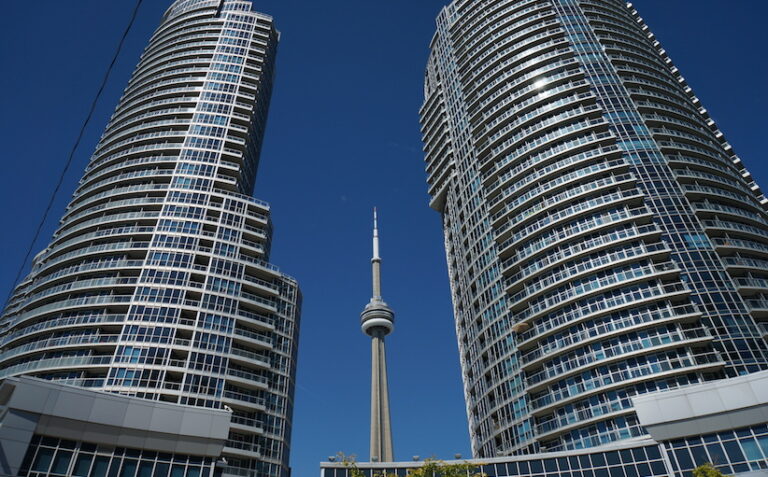
Theo các chuyên gia bất động sản, tại Toronto, tình trạng chủ nhà trả tiền mặt cho người thuê dọn ra khỏi căn hộ của họ, được gọi là “cash for key – tiền mặt đổi chìa khóa”, đang gia tăng. Thực tế này đang trở nên phổ biến hơn do áp lực tài chính mà chủ nhà phải đối mặt, chẳng hạn như lãi suất cao hơn.
Mặc dù vẫn còn tương đối hiếm, nhưng các trường hợp trao đổi ‘tiền mặt lấy chìa khóa’ đang ngày càng gia tăng, trong đó các nhà đầu tư bất động sản muốn bán tài sản của họ là lý do chính.
Các đề nghị ưu đãi thường xảy ra ở những căn hộ được kiểm soát tiền thuê, nơi khoản thanh toán tiền thuê hàng tháng của người thuê có thể không đáp ứng được kỳ vọng về dòng tiền của nhà đầu tư.
Số tiền được đưa ra trong các giao dịch đổi tiền mặt lấy chìa khóa khác nhau, với các báo cáo dao động từ $10,000 đến $30,000 hoặc thậm chí giá trị tiền thuê một năm, tùy thuộc vào tình hình và số tiền thuê phải trả.
Sự chậm trễ trong việc tòa án Ontario xử lý các tranh chấp giữa chủ nhà và người thuê nhà có thể góp phần làm tăng những lời đề nghị như vậy.
Quyền của người thuê nhà trong những tình huống này được luật Ontario bảo vệ, cho phép họ ở lại căn hộ với cùng mức giá thuê trừ khi có những trường hợp cụ thể, chẳng hạn như không trả tiền thuê nhà, có thỏa thuận với chủ nhà hoặc chủ nhà cần chuyển đến ở hoặc tiến hành sửa chữa lớn.
In Toronto, the practice of landlords offering cash to tenants to vacate their units, known as “cash for keys,” has been on the rise, according to real estate professionals. This practice is becoming more prevalent due to financial pressures faced by landlords, such as higher interest rates.
While still relatively uncommon, instances of cash-for-keys offers are increasing, with real estate investors looking to sell their properties being the primary source.
The offers often occur in rent-controlled condos where tenants’ monthly rent payments may not cover investors’ cash-flow expectations. The amounts offered in cash-for-keys deals vary, with reports ranging from $10,000 to $30,000 or even a year’s worth of rent, depending on the situation and rent paid. The delays in Ontario’s tribunal handling landlord-tenant disputes may contribute to the increase in such offers.
Tenant rights in these situations are protected by Ontario law, allowing them to stay in the unit at the same rent unless there are specific circumstances, such as default, an agreement with the landlord, or the landlord’s need to move in or perform extensive renovations.
Despite a challenging year for real estate sales, realtors at Royal LePage express confidence in the Toronto housing market’s revival in 2024, expecting prices to rise after a period of uncertainty.
Market Confidence:
Royal LePage dismisses predictions of a potential crash and believes in the resurgence of Toronto’s housing market, with prices set to rebound in 2024.
National Forecast:
The firm anticipates rising home prices not only in Toronto but across Canada, challenging the narrative that the market’s recovery is solely contingent on Bank of Canada rate cuts.
Consumer Confidence:
Royal LePage CEO emphasizes that consumer confidence, rather than interest rates, will be the key driver of the housing market’s recovery. A tipping point in consumer confidence is expected in the first quarter of 2024.
Market Performance:
In the last quarter of 2023, Canada’s national aggregate home price increased by 4.3%, while Toronto experienced a spike of 5.1%, the highest among major cities.
Price Projections:
Royal LePage forecasts a six percent surge in the average home price in the Greater Toronto Area (GTA) by the end of 2024, reaching $1,190,698. This growth is attributed to a brisk spring market and increasing demand.
Comparison with Other Cities:
Calgary is expected to outpace Toronto in price increase, with an anticipated eight percent jump, reaching $716,580. Vancouver remains the most expensive city, with an estimated aggregate price of $1,256,703, marking a three percent increase.
Optimism and Borrowing Costs:
Canadians’ optimism about borrowing costs is noted, and the anticipation of rate cuts is expected to drive real estate activity, with home prices forecasted to see modest gains in the first half of 2024, followed by more considerable increases in the second half.
Royal LePage’s optimistic forecast for Toronto’s housing market in 2024 challenges the prevailing uncertainty. The firm emphasizes the role of consumer confidence and anticipates a resurgence in demand, leading to increased home prices in the GTA and across Canada.
Bất chấp một năm đầy thử thách đối với hoạt động bán bất động sản, các nhà môi giới tại Royal LePage bày tỏ sự tin tưởng vào sự hồi sinh của thị trường nhà ở Toronto vào năm 2024, kỳ vọng giá sẽ tăng sau một thời gian bất ổn.
Niềm tin thị trường:
Royal LePage bác bỏ những dự đoán về một vụ sụp đổ tiềm ẩn và tin vào sự hồi sinh của thị trường nhà ở Toronto, với giá nhà sẽ tăng trở lại vào năm 2024.
Dự báo Quốc gia:
Công ty dự đoán giá nhà sẽ tăng không chỉ ở Toronto mà còn trên khắp Canada, thách thức quan điểm cho rằng sự phục hồi của thị trường chỉ phụ thuộc vào việc cắt giảm lãi suất của Ngân hàng Canada.
Niềm tin của người tiêu dùng:
Giám đốc điều hành Royal LePage nhấn mạnh rằng niềm tin của người tiêu dùng, chứ không phải lãi suất, sẽ là động lực chính cho sự phục hồi của thị trường nhà ở. Điểm bùng phát về niềm tin của người tiêu dùng dự kiến sẽ xảy ra vào quý đầu tiên của năm 2024.
Hiệu suất Thị trường:
Trong quý cuối cùng của năm 2023, giá nhà tổng hợp trên toàn quốc của Canada đã tăng 4,3%, trong khi Toronto có mức tăng đột biến 5,1%, cao nhất trong số các thành phố lớn.
Dự báo giá:
Royal LePage dự báo giá nhà trung bình ở Khu vực Greater Toronto (GTA) sẽ tăng 6% vào cuối năm 2024, đạt 1.190.698 đô la. Sự tăng trưởng này là do thị trường mùa xuân sôi động và nhu cầu ngày càng tăng.
So sánh với các thành phố khác:
Calgary dự kiến sẽ vượt qua Toronto về mức tăng giá, với mức tăng dự đoán là 8%, đạt mức $716,580. Vancouver vẫn là thành phố đắt đỏ nhất, với tổng giá ước tính là 1.256.703 đô, tăng 3%.
Sự lạc quan và chi phí đi vay:
Sự lạc quan của người Canada về chi phí đi vay được ghi nhận và dự đoán về việc cắt giảm lãi suất dự kiến sẽ thúc đẩy hoạt động bất động sản, với giá nhà được dự báo sẽ tăng khiêm tốn trong nửa đầu năm 2024, sau đó là sự gia tăng đáng kể hơn trong nửa cuối năm 2024. Dự báo lạc quan của Royal LePage về thị trường nhà ở Toronto vào năm 2024 thách thức sự không chắc chắn hiện hành. Công ty nhấn mạnh vai trò của niềm tin người tiêu dùng và dự đoán nhu cầu sẽ tăng trở lại, dẫn đến giá nhà tăng ở GTA và trên khắp Canada.
The federal government will kick off 2024 by issuing the first carbon pricing rebate, officially known as the Climate Action Incentive payment, to eligible Canadians starting this Monday. Here’s a breakdown of what you can expect and how much you could receive.
Who’s Eligible?
Residents in provinces subject to the federal carbon tax, namely Alberta, Ontario, Manitoba, Saskatchewan, New Brunswick, P.E.I, Nova Scotia, and Newfoundland and Labrador, are eligible to receive the rebate.
However, residents in British Columbia, Quebec, and the Northwest Territories, which do not participate in the federal carbon pollution pricing system, are excluded from receiving the rebate.
How to Receive the Rebate
Eligible Canadians in the participating provinces will automatically receive the rebate through direct deposit or by cheque. To qualify, individuals must have filed their income tax and benefit returns.
Supplement for Small and Rural Communities
The federal carbon pricing plan includes a 10 per cent supplement for residents in small and rural communities, applied beyond the base payment. Prime Minister Justin Trudeau announced an increase of this supplement to 20 per cent in April 2024, recognizing the higher energy needs and limited access to cleaner transportation options in these areas.
Rebate Amounts Based on Household Size
The rebate amount varies depending on the size of the household. A family of four can expect the following pollution price rebate amounts:
$386 in Alberta
$264 in Manitoba
$184 in New Brunswick
$328 in Newfoundland and Labrador
$248 in Nova Scotia
$244 in Ontario
$240 in Prince Edward Island
$340 in Saskatchewan
Individuals in New Brunswick will receive $92, and two-person households with a spouse or common-law partner will get $46, or $23 per child under 19.
In Alberta, an individual can receive $193, a spouse or common-law partner $96.50 and $48.25 per child under 19.
In Manitoba, it’s $132 for an individual, $66 for a spouse or common-law partner and $33 per child under 19.
In Ontario, an individual can expect $122, a spouse or common-law partner $61 and $30.50 per child under 19.
In Saskatchewan, it’s $170 for an individual, $85 for a spouse or common-law partner and $42.50 per child under 19.
In Newfoundland, an individual can expect $164, a spouse or common-law partner $82 and $41 per child under 19.
In Nova Scotia, it’s $124 for an individual, $62 for a spouse or common-law partner and $31 per child under 19.
In Prince Edward Island, an individual is slated to receive $120, while a spouse or common-law partner can anticipate $60, with an additional $30 allocated per child under 19.
The Environment and Climate Change Canada (ECCC) clarifies that all residents of P.E.I are classified as living in a small and rural community. Consequently, the amounts disbursed in the region will incorporate the 10 per cent rural supplement.
Ottawa’s Intent and Climate Goals
Ottawa states that the rebate is designed to offset the cost of federal pollution pricing and aligns with the federal government’s commitment to reducing emissions by 40 per cent by 2030, with the ultimate goal of achieving net-zero emissions by 2050.
Impact on Low and Middle-Income Households
The Environment and Climate Change Canada (ECCC) notes that low and middle-income households will benefit the most from these rebates. Approximately eight out of ten households are expected to receive more money back through the payment than they typically pay due to the federal pollution pricing system.
Proceeds Allocation
Ninety per cent of the direct proceeds from Ottawa’s fuel charge are directed to individuals and families through pollution price rebates, issued every three months. The remaining 10 per cent is allocated to emissions-intensive, trade-exposed, small and medium-sized enterprises, and Indigenous groups.
The carbon pricing rebate is not only seen as a financial offset for Canadians but is an integral part of Canada’s strategy to combat climate change. As the government aims to reduce emissions, the rebate serves both as a support mechanism for everyday affordability challenges and an incentive for individuals and businesses to contribute to a sustainable future.
Những người Canada đủ điều kiện sẽ nhận được khoản tiền hoàn thuế carbon đầu tiên vào năm 2024 từ chính phủ liên bang bắt đầu từ thứ Hai, ngày 15/1.
Khoản tiền này, chính thức được gọi là khoản thanh toán Khuyến khích Hành động vì Khí hậu, sẽ được áp dụng cho những người sống ở các tỉnh áp dụng thuế carbon liên bang.
Cư dân ở Alberta, Ontario, Manitoba, Saskatchewan, New Brunswick, P.E.I, Nova Scotia, và Newfoundland và Labrador sẽ tự động nhận được khoản thanh toán thông qua gửi tiền trực tiếp hoặc bằng séc, miễn là họ đã nộp tờ khai thuế thu nhập và phúc lợi.
British Columbia, Quebec và Northwest Territories không tham gia vào hệ thống định giá ô nhiễm carbon liên bang, vì vậy cư dân những tỉnh này không đủ điều kiện để nhận.
Kế hoạch định giá carbon liên bang bao gồm khoản bổ sung 10% cho cư dân ở các cộng đồng nhỏ và nông thôn, ngoài khoản thanh toán cơ bản.
Thủ tướng Justin Trudeau đã công bố vào tháng 10 rằng số tiền này sẽ tăng gấp đôi lên 20% vào tháng 4 năm nay như một hình thức thừa nhận nhu cầu năng lượng ngày càng tăng.
Số tiền nhận được tùy thuộc vào quy mô của hộ gia đình.
Theo Cơ quan Môi trường và Biến đổi Khí hậu Canada (ECCC), một gia đình bốn người sẽ nhận được số tiền sau đây:
$386 ở Alberta
$264 ở Manitoba
$184 ở New Brunswick
$328 ở Newfoundland và Labrador
$248 ở Nova Scotia
$244 ở Ontario
$240 ở P.E.I
$340 ở Saskatchewan
Những người độc thân ở New Brunswick sẽ nhận được 92 đô. Các hộ gia đình hai người có vợ/chồng hoặc bạn đời chung sống sẽ nhận được 46 đô hoặc 23 đô cho mỗi trẻ em dưới 19 tuổi.
Ở Alberta, mỗi người có thể nhận được $193, vợ/chồng hoặc bạn đời chung sống như vợ chồng có thể nhận được $96,50 và $48,25 cho mỗi đứa trẻ dưới 19 tuổi.
Ở Manitoba, mỗi người nhận được 132 đô, $66 cho vợ/chồng hoặc $33 cho mỗi đứa trẻ dưới 19 tuổi.
Ở Ontario, một người có thể nhận được $122, vợ/chồng hoặc bạn đời chung sống như vợ chồng có thể nhận được $61 và $30,50 cho mỗi đứa trẻ dưới 19 tuổi.
Ở Saskatchewan, mỗi người nhận được 170 đô, 85 đô cho vợ/chồng hoặc 42,50 đô cho mỗi trẻ em dưới 19 tuổi.
Ở Newfoundland, một cá nhân có thể nhận được $164, vợ/chồng hoặc bạn đời chung sống là $82 và $41 cho mỗi đứa trẻ dưới 19 tuổi.
Ở Nova Scotia, mỗi người nhận được 124 đô, 62 đô cho vợ/chồng hoặc 31 đô cho mỗi đứa trẻ dưới 19 tuổi. Ở PEI, mỗi người có thể nhận được 120 đô, vợ/chồng hoặc bạn đời chung sống là 60 đô và 30 đô cho mỗi đứa trẻ dưới 19 tuổi.
In a groundbreaking shift in the quarterly ranking of global passports, six countries have emerged as frontrunners for the coveted title of the world’s most powerful passports in 2024.
Citizens of France, Germany, Italy, Japan, Singapore, and Spain are now enjoying unparalleled travel freedom, with access to an astonishing 194 destinations globally. This marks a historic milestone, the highest number recorded in the 19-year history of the Henley Passport Index – a prestigious ranking curated by London-based global citizenship and residence advisory firm Henley & Partners, utilizing exclusive data from the International Air Transport Association (IATA).
Europe Ascends: For the past five years, Japan and Singapore dominated the top spot, but the current lineup reflects a triumphant rise for Europe. Finland and Sweden, alongside South Korea, claim the second position with seamless entry to 193 destinations. Austria, Denmark, Ireland, and the Netherlands follow closely in third place, boasting access to 192 destinations.
Expanding Horizons: Australia and New Zealand have significantly improved their rankings, now securing the sixth position alongside Czechia and Poland. The United States and Canada share the seventh spot, tied with Hungary, offering visa-free access to 188 destinations.
Noteworthy Shifts: The United Arab Emirates stands out as the most remarkable climber over the past decade, securing the 11th position this year by adding an impressive 106 destinations to its visa-free score since 2014.
Global Mobility Gap: While the overall trend over the past two decades has favored increased travel freedom, there’s a widening global mobility gap between the top and bottom of the index. Christian H. Kaelin, Chair of Henley & Partners, highlights that top-ranked countries can now travel to 166 more destinations visa-free than Afghanistan, situated at the bottom of the ranking with access to just 28 countries without a visa.
Arton Capital’s Perspective: Arton Capital’s Passport Index, another influential ranking, places the United Arab Emirates at the top spot with a visa-free/visa-on-arrival score of 180. In second place are five European countries: Germany, Spain, France, Italy, and the Netherlands.
The Rise of Albania: Arton Capital’s 2023 roundup noted Albania as a rising star, experiencing significant global mobility gains. Demand for its industrious citizens has surged, with governments actively facilitating easier living and working arrangements for Albanians in their countries.
The world’s most powerful passports for 2024
France, Germany, Italy, Japan, Singapore, Spain (194 destinations)
Belgium, Luxembourg, Norway, Portugal, United Kingdom (191 destinations)
Greece, Malta, Switzerland (190 destinations)
Czech Republic, New Zealand, Poland (189 destinations)
Canada, Hungary, United States (188 destinations)
Estonia, Lithuania (187 destinations)
Latvia, Slovakia, Slovenia (186 destinations)
Iceland (185 destinations) Conclusion: As the world navigates evolving geopolitical landscapes, the ranking of powerful passports reflects not just travel privileges but also the changing dynamics of global citizenship. The 2024 Passport Index underscores the ongoing pursuit of open borders, fostering greater connectivity and opportunities for citizens worldwide.
Một sự thay đổi lớn trong bảng xếp hạng hàng quý về hộ chiếu quyền lực nhất thế giới: Lần đầu tiên có sáu quốc gia cùng được xếp ở vị trí hàng đầu trong bảng xếp hạng hộ chiếu mạnh nhất thế giới vào năm 2024.
Công dân của Pháp, Đức, Ý, Nhật Bản, Singapore và Tây Ban Nha có thể được miễn thị thực hoặc miễn thị thực khi nhập cảnh vào 194 điểm đến trên thế giới – con số cao nhất kể từ khi Chỉ số Hộ chiếu Henley theo dõi các quyền tự do đi lại toàn cầu trong 19 năm qua.
Các quốc gia châu Á như Nhật Bản và Singapore đã thống trị vị trí số 1 trong 5 năm qua, nhưng top 5 mới là sự trỗi dậy vẻ vang của châu Âu.
Phần Lan và Thụy Điển đồng hạng với Hàn Quốc ở vị trí thứ hai – dễ dàng tiếp cận 193 điểm đến – trong khi Áo, Đan Mạch, Ireland và Hà Lan đứng thứ ba (với 192 điểm đến).
Bỉ, Luxembourg, Na Uy, Bồ Đào Nha và Vương quốc Anh đứng ở vị trí thứ 4 (191 điểm đến), trong khi Hy Lạp, Malta và Thụy Sĩ ở vị trí thứ 5 (190 điểm đến). Úc và New Zealand đã cải thiện thứ hạng và hiện đứng ở vị trí thứ 6 cùng với Cộng hòa Séc và Ba Lan (189 điểm đến).
Trong khi đó, Hoa Kỳ và Canada đồng hạng ở vị trí thứ bảy, cùng với Hungary, với quyền miễn thị thực tới 188 điểm đến.
Khoảng cách ngày càng tăng
Các Tiểu vương quốc Ả Rập Thống nhất vẫn là quốc gia có chỉ số tăng cao nhất trong thập kỷ qua, bổ sung thêm 106 điểm đến vào điểm miễn thị thực kể từ năm 2014 và giành được vị trí thứ 11 trong năm nay.
Afghanistan là quốc gia nằm ở cuối bảng xếp hạng với chỉ 28 quốc gia không cần thị thực. Syria – chỉ được miễn thị thực tới 29 điểm đến – đứng áp chót trong bảng xếp hạng. Iraq có thể truy cập 31 nơi và Pakistan có thể truy cập 34 điểm đến.
Những hộ chiếu quyền lực nhất thế giới năm 2024
Pháp, Đức, Ý, Nhật Bản, Singapore, Tây Ban Nha (194 điểm đến)
Phần Lan, Hàn Quốc, Thụy Điển (193 điểm đến)
Áo, Đan Mạch, Ireland, Hà Lan (192 điểm đến)
Bỉ, Luxembourg, Na Uy, Bồ Đào Nha, Vương quốc Anh (191 điểm đến)
Hy Lạp, Malta, Thụy Sĩ (190 điểm đến)
Cộng hòa Séc, New Zealand, Ba Lan (189 điểm đến)
Canada, Hungary, Hoa Kỳ (188 điểm đến)
Estonia, Lithuania (187 điểm đến) • Latvia, Slovakia, Slovenia (186 điểm đến) • Iceland (185 điểm đến)
As the new year begins, Canadians are expressing their concerns for 2024. According to recent polling by Nanos Research, the key worries revolve around the cost of living and immigration.
Nanos surveyed over 1,000 Canadians aged 18 or older from December 27 to 29, 2023. The findings indicate that half of Canadians with a mortgage are either “concerned” or “somewhat concerned” about making payments. Notably, 35% of respondents want the House of Commons to prioritize addressing the cost of living, with up to 61% expressing a desire for Canada to accept fewer immigrants.
Mortgage Payments Worries
The survey reveals that one in two Canadians with a mortgage is uneasy about their ability to make payments when their mortgage renews. Younger Canadians, particularly those between 18 and 35, expressed higher concern levels (29%), while those aged 55 and older demonstrated notably less worry, with only 16% concerned.
House of Commons Priority: Cost of Living
When asked about the top priorities for the House of Commons in 2024, 35.4% of respondents pointed to the rising cost of living. The younger demographic, aged 18 to 34, emphasized this priority more strongly, with 44.5% expressing concern.
Changing Views on Immigration
Nanos found that an increasing number of Canadians wish to see fewer immigrants accepted in 2024, marking a significant shift from 2023. Sixty-one percent of respondents held this view, an eight percent increase from September 2023. The data also shows a declining trend in the proportion of Canadians wanting to accept more immigrants, dropping from 17% in 2020 to five percent in the recent polling.
Housing Crisis Driving Immigration Concerns
The survey suggests that the housing crisis is a significant factor influencing opinions on immigration, with 31% attributing their desire for fewer immigrants to the lack of available housing. Additionally, 24% feel that Canada lacks the necessary infrastructure, social services, and resources to support an increased immigrant population.
These findings from Nanos Research provide a snapshot of the concerns shaping the Canadian landscape in 2024, ranging from mortgage worries to broader economic and societal issues.
Khi năm mới bắt đầu, người dân Canada bày tỏ mối quan ngại của họ đối với năm 2024. Theo cuộc thăm dò gần đây của Nanos Research, mối lo ngại chính xoay quanh chi phí sinh hoạt và nhập cư.
Nanos đã khảo sát hơn 1.000 người Canada từ 18 tuổi trở lên từ ngày 27 đến ngày 29 tháng 12 năm 2023. Các phát hiện cho thấy rằng một nửa số người Canada có khoản vay thế chấp “có quan ngại” hoặc “có phần lo ngại” về việc thanh toán. Đáng chú ý, 35% số người được hỏi muốn Hạ viện ưu tiên giải quyết chi phí sinh hoạt, trong đó có tới 61% bày tỏ mong muốn Canada chấp nhận ít người nhập cư hơn.
Nỗi lo thanh toán thế chấp
Cuộc khảo sát cho thấy cứ hai người Canada có khoản thế chấp thì có một người không yên tâm về khả năng thanh toán khi khoản thế chấp của họ được gia hạn. Những người Canada trẻ tuổi hơn, đặc biệt là những người từ 18 đến 35 tuổi, bày tỏ mức độ lo lắng cao hơn (29%), trong khi những người từ 55 tuổi trở lên tỏ ra ít lo lắng hơn đáng kể, chỉ có 16% quan tâm.
Ưu tiên cho Hạ viện: Chi phí sinh hoạt
Khi được hỏi về các ưu tiên hàng đầu của Hạ viện vào năm 2024, 35,4% số người được hỏi chỉ ra chi phí sinh hoạt ngày càng tăng. Nhóm nhân khẩu học trẻ hơn, từ 18 đến 34 tuổi, nhấn mạnh ưu tiên này mạnh mẽ hơn, với 44,5% bày tỏ lo ngại.
Thay đổi quan điểm về nhập cư
Nanos nhận thấy rằng ngày càng nhiều người Canada mong muốn có ít người nhập cư được chấp nhận vào năm 2024, đánh dấu sự thay đổi đáng kể so với năm 2023. 61% số người được hỏi giữ quan điểm này, tăng 8% so với tháng 9 năm 2023. Dữ liệu cũng cho thấy xu hướng giảm trong tỷ lệ người Canada muốn chấp nhận nhiều người nhập cư hơn, giảm từ 17% vào năm 2020 xuống còn 5% trong cuộc thăm dò gần đây.
Khủng hoảng nhà ở thúc đẩy mối lo ngại về nhập cư
Cuộc khảo sát cho thấy cuộc khủng hoảng nhà ở là một yếu tố quan trọng ảnh hưởng đến quan điểm về nhập cư, với 31% cho rằng mong muốn có ít người nhập cư hơn là do thiếu nhà ở sẵn có. Ngoài ra, 24% cảm thấy rằng Canada thiếu cơ sở hạ tầng, dịch vụ xã hội và nguồn lực cần thiết để hỗ trợ số lượng người nhập cư ngày càng tăng.
Những phát hiện này từ Nanos Research cung cấp cái nhìn tổng quan về những mối lo ngại đang hình thành nên bối cảnh Canada vào năm 2024, từ lo lắng về thế chấp đến các vấn đề kinh tế và xã hội rộng lớn hơn.