

2 C
Toronto
Tuesday, April 7, 2026
Home Blog Page 49

1 trong 3 người Canada không biết sự khác biệt giữa cơn đau tim và ngừng tim

Một cuộc thăm dò của Tổ chức Tim mạch và Đột quỵ cho thấy mặc dù 50% người Canada bị ảnh hưởng bởi bệnh tim và đột quỵ, nhưng có một tỷ lệ đáng kể thiếu kiến thức quan trọng về các vấn đề sức khỏe này.

Cuộc thăm dò cho thấy cứ ba người Canada thì có một người không hiểu sự khác biệt giữa ngừng tim (cardiac arrest) và đau tim (heart attack); đồng thời, họ không biết rằng nam giới và phụ nữ có những dấu hiệu khác nhau khi lên cơn đau tim.

Cần phải nâng cao nhận thức về những tình trạng này vì cả hai đều là những trường hợp cấp cứu y tế cần được chăm sóc ngay lập tức.

Ngừng tim xảy ra khi tim đột ngột ngừng đập, trong khi cơn đau tim liên quan đến việc làm chậm hoặc chặn lưu lượng máu đến tim.

Đột quỵ (stroke) là do tắc nghẽn dòng máu lên não.

Các triệu chứng của cơn đau tim có thể khác nhau giữa nam và nữ.

Những gì chúng ta coi là cơn đau tim rất có thể là những gì xảy ra ở nam giới. Nhưng phụ nữ trải qua cơn đau tim theo cách khác

Phụ nữ có thể gặp các triệu chứng không điển hình như khó thở, áp lực hoặc đau ở vùng ngực dưới hoặc bụng, chóng mặt, áp lực ở lưng trên hoặc cực kỳ mệt mỏi.

Tỷ lệ sống sót khi bị ngừng tim bên ngoài bệnh viện rất thấp, với 90% số người không sống sót. Cứ 3 người Canada thì có một người không biết về sự thật này.

Một số người Canada tin rằng họ nên đưa người bị đột quỵ (stroke) đến bệnh viện ngay lập tức, nhưng thực tế họ nên gọi 911 ngay lập tức.

Về vấn đề ngừng tim, Lesley James của Heart & Stroke cho biết: “Việc đưa ai đó đến bệnh viện sẽ trì hoãn thời gian khi biện pháp can thiệp có thể được sử dụng ngay tại chỗ bằng AED [máy khử rung tim ngoài tự động] và bằng CPR.”

Thay vào đó, nếu bạn thấy ai đó đột nhiên ngã xuống sàn, hãy gọi 9-1-1 ngay lập tức.

Chăm sóc y tế ngay lập tức là rất quan trọng để cải thiện tiên lượng của bệnh ngừng tim, đau tim và đột quỵ. Gọi 911 ngay lập tức là điều cần thiết trong những tình huống này.

Theo Tiến sĩ Robert Fahed, nhà thần kinh học tại Bệnh viện Ottawa, các cơn đau tim và đột quỵ là kết quả của các yếu tố nguy cơ mạch máu cơ bản giống nhau, bao gồm hút thuốc, tiểu đường, cholesterol, tăng huyết áp, béo phì và thiếu tập thể dục. Fahed nói trong một cuộc phỏng vấn rằng những yếu tố đó gây ra phần lớn các cơn đột quỵ và đau tim ở Canada.


Canadian Rockies named one of the most beautiful UNESCO sites on Earth

0

Canada’s Canadian Rockies have recently been hailed as one of the UNESCO-recognized most beautiful places on the planet.

The list compiled by Conde Nast Traveler reveals that the Canadian Rockies have secured a position among the 39 destinations on the list, making it the only location in Canada to be featured.

The Rockies are comprised of four national parks in Alberta and B.C. – Banff, Jasper, Kootenay, and Yoho.

The Canadian Rockies are known for offering some of the best long-distance hiking and wildlife-watching experiences in Canada, with highlights such as Moraine Lake and Lake Louise in Banff National Park, Mount Edith Cavell in Jasper National Park, Burgess Shale and Emerald Lake in Yoho National Park. Other iconic locations on the list include Machu Picchu in Peru, the Great Pyramids of Giza in Egypt, the Great Barrier Reef in Australia, and Yosemite National Park in the United States.

Canadian Rockies được UNESCO công nhận đẹp nhất trên Trái đất

0

Dãy núi Rockies (Canadian Rockies) của Canada vừa được mệnh danh là một trong những địa điểm được UNESCO công nhận đẹp nhất trên hành tinh.

Danh sách do Conde Nast Traveller biên soạn, tiết lộ rằng Canadian Rockies đã giành được một vị trí trong số 39 địa điểm trong danh sách, khiến đây trở thành địa điểm duy nhất ở Canada lọt vào danh sách này.

Rockies được tạo thành từ một nhóm gồm bốn công viên quốc gia ở Alberta và B.C. – Banff, Jasper, Kootenay và Yoho.

Canadian Rockies thường tổ chức một số hoạt động đi bộ đường dài và ngắm động vật hoang dã tốt nhất ở Canada, với các điểm như Hồ Moraine và Hồ Louise ở Công viên Quốc gia Banff, Núi Edith Cavell ở Công viên Quốc gia Jasper, Burgess Shale và Hồ Emerald ở Công viên Quốc gia Yoho. Các địa điểm mang tính biểu tượng khác lọt vào danh sách bao gồm Machu Picchu ở Peru, Kim tự tháp Giza ở Ai Cập, Rạn san hô Great Barrier ở Úc và Công viên quốc gia Yosemite ở Hoa Kỳ.

Thời gian tiết kiệm ánh sáng ban ngày ở Canada sắp kết thúc và đây là lúc bạn chỉnh giờ đồng hồ

Thời gian tiết kiệm ánh sáng ban ngày (Daylight saving time – DST) sẽ đưa đồng hồ lùi lại một giờ vào mùa thu này ở hầu hết các vùng của Canada. Cho dù bạn yêu hay ghét truyền thống tiến lên hoặc lùi lại hai lần một năm này, thì thời gian sẽ sớm thay đổi và thói quen ngủ của bạn sắp bị gián đoạn lần thứ hai vào năm 2023.

Sau đây là những điều bạn cần biết về việc kết thúc giờ tiết kiệm ánh sáng ban ngày ở Canada vào năm 2023.

Giờ tiết kiệm ánh sáng ban ngày là gì?

Giờ tiết kiệm ánh sáng ban ngày là cách đặt đồng hồ sớm hơn một giờ so với giờ tiêu chuẩn vào mùa xuân và lùi lại một giờ vào mùa thu để tối đa hóa ánh sáng ban ngày tự nhiên.

Theo Hội đồng Nghiên cứu Quốc gia Canada, thời gian tiết kiệm ánh sáng ban ngày kéo dài từ Chủ nhật thứ hai của tháng 3 cho đến Chủ nhật đầu tiên của tháng 11 .

Thời gian tiết kiệm ánh sáng ban ngày đã được sử dụng hơn một trăm năm ở Canada, bắt đầu từ năm 1908.

Mặc dù đã có những lời kêu gọi chấm dứt giờ tiết kiệm ánh sáng ban ngày hoặc biến nó thành vĩnh viễn mỗi năm và trong khi một số tỉnh đã thông qua luật ngăn chặn việc chuyển đổi qua lại, song, những luật đó vẫn sẽ không có hiệu lực cho đến khi các tiểu bang lớn của Hoa Kỳ như New York và California thực hiện cùng một quyết định.

Khi nào thời gian tiết kiệm ánh sáng ban ngày kết thúc vào năm 2023?

Giờ tiết kiệm ánh sáng ban ngày kết thúc vào lúc 2 giờ sáng ngày 5 tháng 11 năm 2023. Đồng hồ sẽ bị lùi lại một giờ đến 1 giờ sáng theo giờ chuẩn địa phương. Điều đó có nghĩa là bình minh và hoàng hôn sẽ đến với bạn sớm hơn một giờ.

Bạn có thể mong đợi mặt trời mọc sớm hơn vào buổi sáng và lặn sớm hơn vào ban đêm khi thời gian tiết kiệm ánh sáng ban ngày kết thúc. Chúng ta cũng sẽ tiếp tục mất đi ánh sáng mặt trời mỗi ngày cho đến ngày đông chí vào ngày 22 tháng 12, đó là lúc chúng ta có ít giờ ánh sáng ban ngày nhất trong năm.

Những vùng nào của Canada sử dụng giờ tiết kiệm ánh sáng ban ngày?

Phần lớn Canada áp dụng giờ tiết kiệm ánh sáng ban ngày, bao gồm tất cả các tỉnh bang như Alberta, Manitoba và Đại Tây Dương. Hầu hết Ontario, Quebec và British Columbia đều tuân theo giờ tiết kiệm ánh sáng ban ngày, mặc dù có một số trường hợp ngoại lệ trong khu vực ở đó và ở các vùng lãnh thổ phía bắc.

Saskatchewan là tỉnh bang duy nhất vẫn sử dụng giờ chuẩn miền trung quanh năm, mặc dù khu vực Lloydminster tuân theo múi giờ miền núi của Alberta.

Canada có loại bỏ thời gian tiết kiệm ánh sáng ban ngày không?

Một số vùng của Canada, như Yukon, Saskatchewan, và một số khu vực ở Quebec, và British Colombia, đã không chỉnh đồng hồ trở lại và nhiều nơi khác ở Canada có thể cũng làm như vậy trong tương lai.

Quyết định có áp dụng giờ tiết kiệm ánh sáng ban ngày hay không là tùy thuộc vào luật pháp của tỉnh, vì vậy trong khi một số khu vực ở Canada có thể không tham gia vào truyền thống này thì những khu vực khác vẫn tham gia.

Ontario đã liên tục nỗ lực để chấm dứt giờ tiết kiệm ánh sáng ban ngày trong tỉnh, nhưng nếu không có sự hỗ trợ của Quebec và New York, sự thay đổi sẽ không sớm diễn ra.

Khi nào thời gian tiết kiệm ánh sáng ban ngày bắt đầu vào năm 2024?

Giờ tiết kiệm ánh sáng ban ngày sẽ quay trở lại ở phần lớn Canada vào Chủ nhật, ngày 10 tháng 3 năm 2024. Thời gian sẽ thay đổi vào sáng sớm trước khi hầu hết mọi người thức dậy.

When daylight saving time 2023 ends in Canada?

0

Daylight saving time (DST) will push the clock back by one hour this fall in most parts of Canada. Whether you love or hate the tradition of springing forward or falling back twice a year, the time will soon change, and your sleep habits will be disrupted for the second time in 2023.

Here’s what you need to know about the end of daylight saving time in Canada in 2023.

What is daylight saving time?

Daylight saving time is the practice of setting the clock one hour ahead of standard time in the spring and one hour back in the fall to maximize natural daylight.

According to the National Research Council of Canada, daylight saving time lasts from the second Sunday in March to the first Sunday in November.

Daylight saving time has been used in Canada for over a century, starting in 1908.

Despite calls to end daylight saving time or make it permanent each year, and while some provinces have passed laws to stop the switching, these laws won’t take effect until major U.S. states like New York and California make a similar decision.

When does daylight saving time end in 2023?

Daylight saving time ends at 2:00 AM on November 5, 2023. The clock will be set back one hour to 1:00 AM local standard time. This means that sunrise and sunset will occur an hour earlier.

You can expect the sun to rise earlier in the morning and set earlier in the evening when daylight saving time ends. We will continue to lose daylight every day until the winter solstice on December 22, which is when we have the least daylight hours of the year.

Which parts of Canada use daylight saving time?

Most of Canada observes daylight saving time, including all provinces like Alberta, Manitoba, and the Atlantic provinces. Most of Ontario, Quebec, and British Columbia also adhere to daylight saving time, although there are some exceptions in certain areas and in the northern territories.

Saskatchewan is the only province that remains on year-round central standard time, although the Lloydminster region follows Alberta’s mountain time.

Is Canada getting rid of daylight saving time?

Some regions of Canada, like Yukon, Saskatchewan, and certain areas in Quebec and British Columbia, have not adjusted their clocks back and may continue to do so in the future.

The decision to observe daylight saving time or not is based on provincial laws, so while some areas in Canada may not participate in this tradition, others still do.

Ontario has been actively trying to end daylight saving time in the province, but without the support of Quebec and New York, the change won’t happen anytime soon.

When does daylight saving time start in 2024?

Daylight saving time will return to most of Canada on Sunday, March 10, 2024. The time will change in the early morning before most people wake up.

Bank of Canada holds interest rate steady at 5%

0

The Bank of Canada has decided to maintain its benchmark interest rate at five percent (5%), marking the second consecutive time it has done so.

This decision is seen as a potential shift towards a more cautious approach after having raised interest rates ten times since last year.

The central bank typically raises interest rates to cool down an overheated economy and lowers them to stimulate borrowing and spending. In early 2022, the bank started aggressively increasing rates to combat rising inflation, which had reached its highest level in 40 years.

The recent economic data, including GDP, employment figures, and inflation, indicated a slowdown in the economy, leading to the decision to keep rates steady. While the bank sees progress in controlling inflation, it remains cautious and believes that inflationary pressures are not fully resolved. The bank expects the economy to continue cooling, with the aim of bringing inflation back to its two percent target by 2025.

Although the bank left the possibility of further rate hikes open, market indicators and investors suggest that more rate increases are unlikely.

There is only a small chance of a rate hike at the next policy meeting in December, and market pricing indicates that interest rates are expected to be lower next summer.

The Canadian dollar also depreciated slightly in response to this news, reflecting the market’s sentiment that further rate hikes are improbable.

The Bank of Canada will provide more insights into its decision during a press conference later in the day.

Ngân hàng Canada giữ lãi suất ổn định ở mức 5%

Ngân hàng Canada đã quyết định duy trì lãi suất chuẩn ở mức 5%, đánh dấu lần thứ hai liên tiếp họ làm như vậy.

Quyết định này được coi là một sự thay đổi tiềm năng theo hướng tiếp cận thận trọng hơn sau khi đã tăng lãi suất 10 lần kể từ năm ngoái.

Ngân hàng trung ương thường tăng lãi suất để hạ nhiệt nền kinh tế đang quá nóng và hạ lãi suất để kích thích vay và chi tiêu. Đầu năm 2022, ngân hàng bắt đầu tăng mạnh lãi suất để chống lạm phát gia tăng, vốn đã lên mức cao nhất trong 40 năm.

Dữ liệu kinh tế gần đây, bao gồm GDP, số liệu việc làm và lạm phát, cho thấy nền kinh tế đang chậm lại, dẫn đến quyết định giữ lãi suất ổn định. Mặc dù ngân hàng nhận thấy có tiến bộ trong việc kiểm soát lạm phát nhưng vẫn thận trọng và tin rằng áp lực lạm phát chưa được giải quyết triệt để.

Ngân hàng kỳ vọng nền kinh tế sẽ tiếp tục hạ nhiệt, với mục tiêu đưa lạm phát trở lại mục tiêu 2% vào năm 2025.

Mặc dù ngân hàng vẫn để ngỏ khả năng tăng lãi suất tiếp theo nhưng các chỉ số thị trường và nhà đầu tư cho thấy khó có khả năng tăng lãi suất thêm nữa.

Chỉ có một ít khả năng xảy ra việc tăng lãi suất tại cuộc họp chính sách tiếp theo vào tháng 12 và giá cả thị trường cho thấy lãi suất dự kiến sẽ thấp hơn vào mùa hè tới. Đồng đô la Canada cũng giảm giá nhẹ trước tin tức này, phản ánh tâm lý của thị trường rằng việc tăng lãi suất tiếp theo là không thể xảy ra. Ngân hàng Canada sẽ cung cấp thêm thông tin chi tiết về quyết định của mình trong cuộc họp báo vào trưa nay.

Finding Social Justice in New York’s Finger Lakes 

0

Freedom and equal rights are societal norms most of us don’t think twice about.

But we should. 

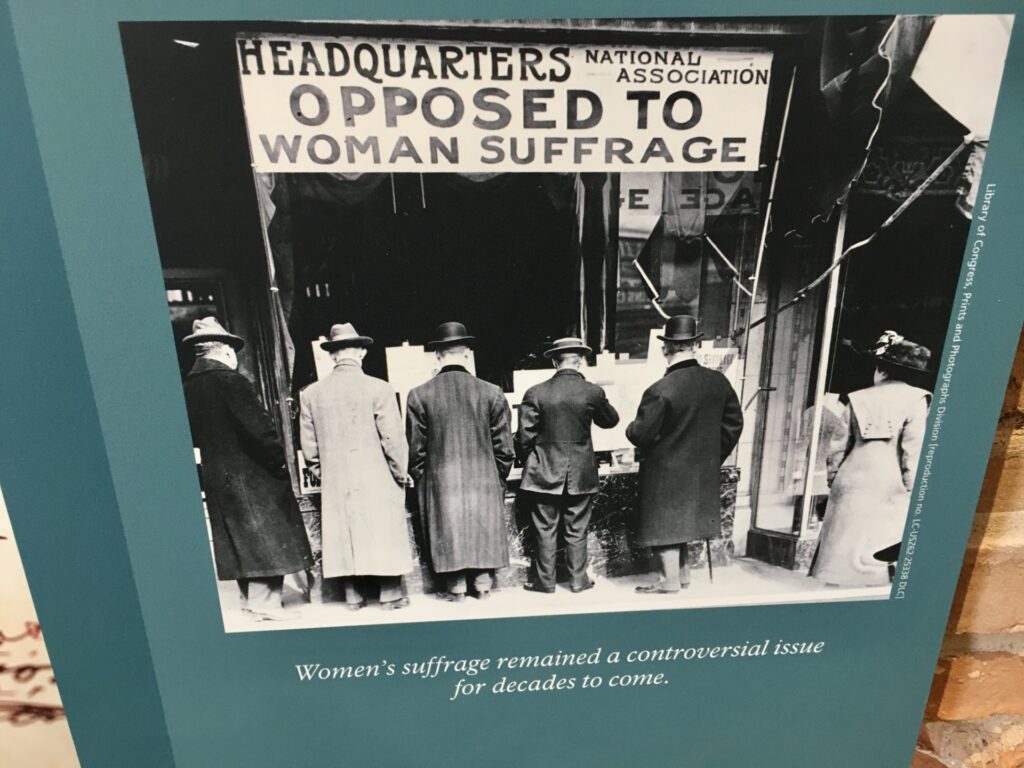
It was only around 160 years ago that slavery was abolished in the United States. And women did not get the vote until 1920.  

In the 1800s abolitionists and suffragettes fought to change the course of history in the United States. The fiery orators and passionate believers who brought these movements to life lived in cities in New York’s Finger Lakes region. These included Rochester, Elmira, Fayetteville, Seneca Falls, and Auburn. 

To learn more about their struggles, my husband and I took a road trip from Toronto to explore these incubators of agitation. Starting in Rochester, an easy three-hour drive, we wanted to learn how the bedrock of North American social justice came about.

It was a refresher that I think many people would benefit from today.

Why the Finger Lakes and Rochester? 

The city of Rochester was America’s first boom town due to the Erie Canal. Shovels hit the earth in 1817 and it was completed in 1825. All done by hand. 

The canal acted as the super hi-way of the 19th century, transporting goods between New York City, through Upper New York State, and on to the Great Lakes. It was a mover of goods, services, entrepreneurs, ideas, and idealists. 

The Birth of Women’s Rights and A Bond with Abolition

Susan B. Anthony, the voice of the women’s rights movement, had a home base in Rochester. So did abolitionist and author Fredrick Douglass, who had escaped slavery in Maryland. Sympathizer and author Mark Twain lived with his wife in Elmira for a time and wrote many of his beloved novels there. Harriet Tubman, a fearless Underground Railroad conductor, lived out her later years in Auburn.

Susan B. Anthony’s Legacy  

Brought up to believe women and men of all backgrounds deserved equal rights. She started as an abolitionist, became involved in the Temperance movement, and then began to agitate for women’s rights and suffrage.

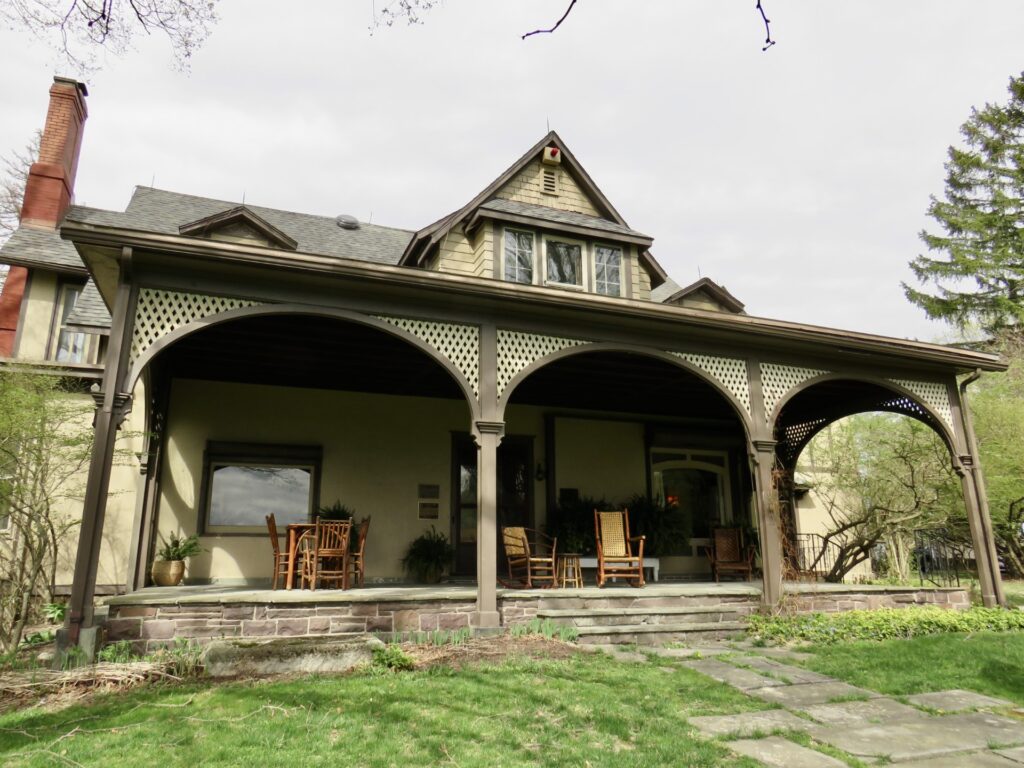
Docent Beryl Brock led us through the house and pointed out Anthony’s alligator bag that never left her side on her many speaking tours across the country. 

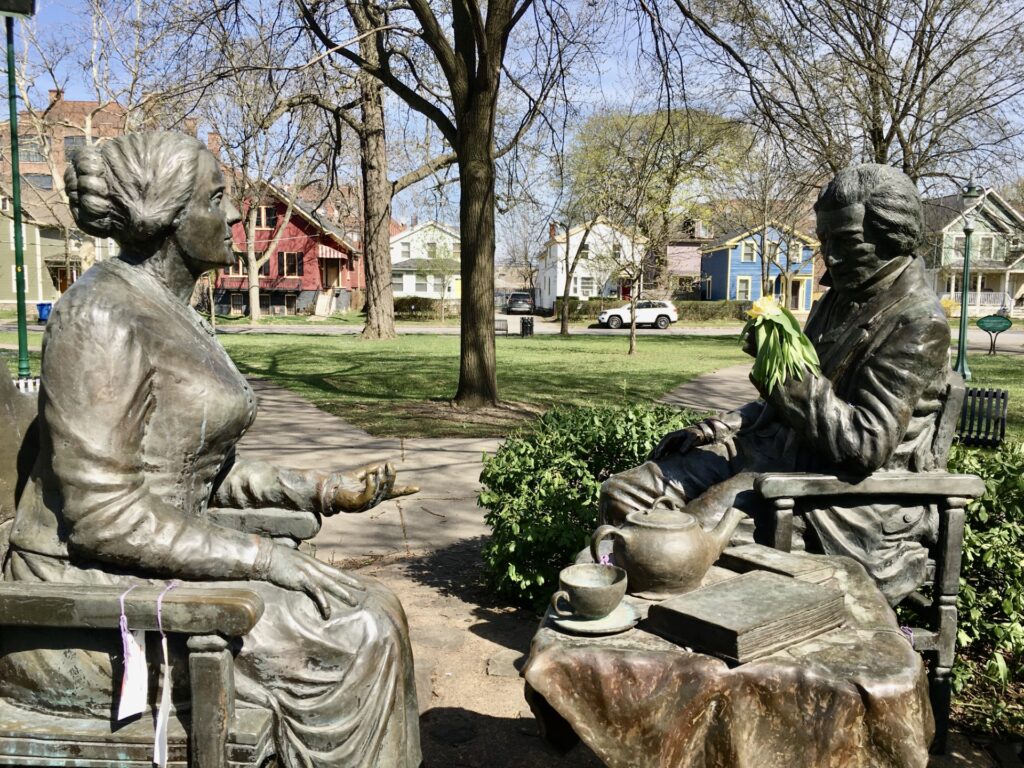
Her colleague Elizabeth Cady Stanton started the suffragette movement and convinced Anthony to come on board. Stanton was married with seven children so Anthony, who was single, was given the role of traveling spokesperson. She endured many challenges but kept on fighting until she died in 1906.

Anthony’s friend, Frederick Douglass, often visited her in this home.

Douglass is buried in the city’s Mount Hope Cemetery, as is Anthony.

Susan B. Anthony’s Antithesis

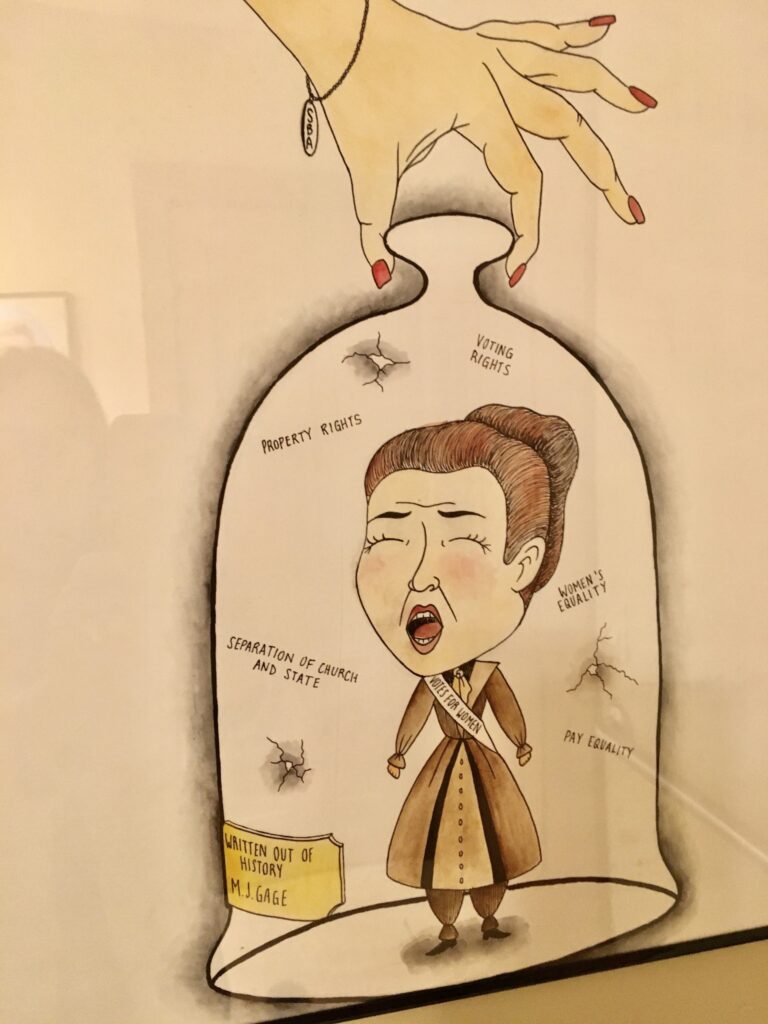
Matilda Joslyn Gage was a suffragette and abolitionist who was thwarted by Anthony. Exhibits in Gage’s home, now a museum in Fayetteville, showed her to be integral to the women’s rights movement at the beginning. But she did not lean into the religious groups that Anthony had corralled from her Temperance connections. Anthony was determined to bring them on board to bring more pressure to the government and force them to give women the vote. 

Gage believed church and state should be separate and eventually, she was pushed out from Anthony’s inner circle.

First Convention for Women’s Rights

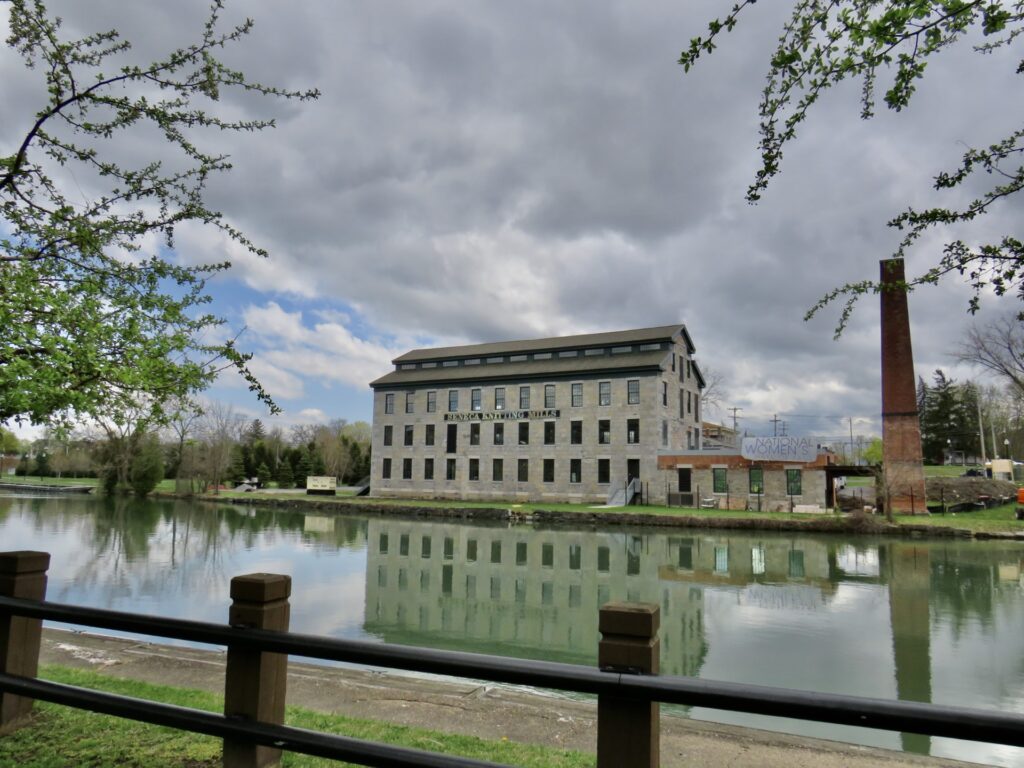
In Seneca Falls, we saw where the first Women’s Rights convention was held in 1848 at the Wesleyan Chapel. Unfortunately, the chapel was not original, but there were plenty of key landmarks to see within the city’s Women’s Rights National Historical Park including the Visitor Center, Elizabeth Cady Stanton House, and Declaration Park.

Across the river, we also peeked into the National Women’s Hall of Fame.

Native American Heritage and Women’s Rights

Traveling 45 minutes west to Ganondagan, we came to the Seneca Art & Culture Center which opened in 2015. 

Exhibits honored the region’s Seneca Nation, the largest group in the Iroquois Confederacy or Six Nations. Iroquois is a word of French origin. A more correct term would be Houdenashonée, meaning “people of the longhouse.”

The property featured a long house that would have housed around 40 people. 

Kristen Asche, a park and recreation aide at the center, told us that the Houdenashonée were way ahead of the suffragettes. 

“The women owned their homes and had full rights to their bodies. This longhouse would have belonged to a grandmother and her daughters. All the men who lived there would be husbands from other clans,” she explained.

Asche also noted that the Houdenashonée government structure is one of democracy and was the model for the U.S. Constitution.

John W. Jones Freedom Seeker 

I had never heard of African-American John W. Jones before, but stopping at his former home in Elmira, I learned much about the outspoken abolitionist. 

“He was born a slave in Virginia to a kindly old spinster who taught him to read and write,” said Tamila Aaron, president of the Board of Trustees, John W. Jones Museum.

Plaques explained how, after escaping from Virginia, Jones arrived in Elmira in 1844 at age 27. He became sexton of the First Baptist Church and was responsible for the graveyard. At night he was a conductor on the Underground Railroad and aided in the flight of hundreds of freedom seekers. 

Eventually, he became a sexton of Woodlawn Cemetery, where almost 3,000 Confederate troops were buried during the Civil War. Most died after being held in the notorious Elmira Civil War Prison Camp. Jones buried every man with dignity. Due to his precise records, the burial site became a federally recognized cemetery.

Mark Twain’s Creative Refuge

Mark Twain was also an area mover and shaker.

At Elmira College Dr. Matt Seybold, associate professor of American Literature and Mark Twain Studies, explained Twain’s connection to the area.

“His wife Olivia was from here. Her father Jervis Langdon was a rich coal baron and abolitionist. They lived on the family farm with Olivia’s sister Susan and her husband Theodore for a time,” noted Seybold.

Twain, whose real name was Samuel Clemons, wrote in a structure resembling a paddle wheeler’s pilot house outside the farmhouse. Some of his most beloved works, including Tom Sawyer and Huckleberry Finn were penned here.

Known as the Mark Twain Study, it now sits on the Elmira College campus. 

Harriet Tubman’s Final Resting Place

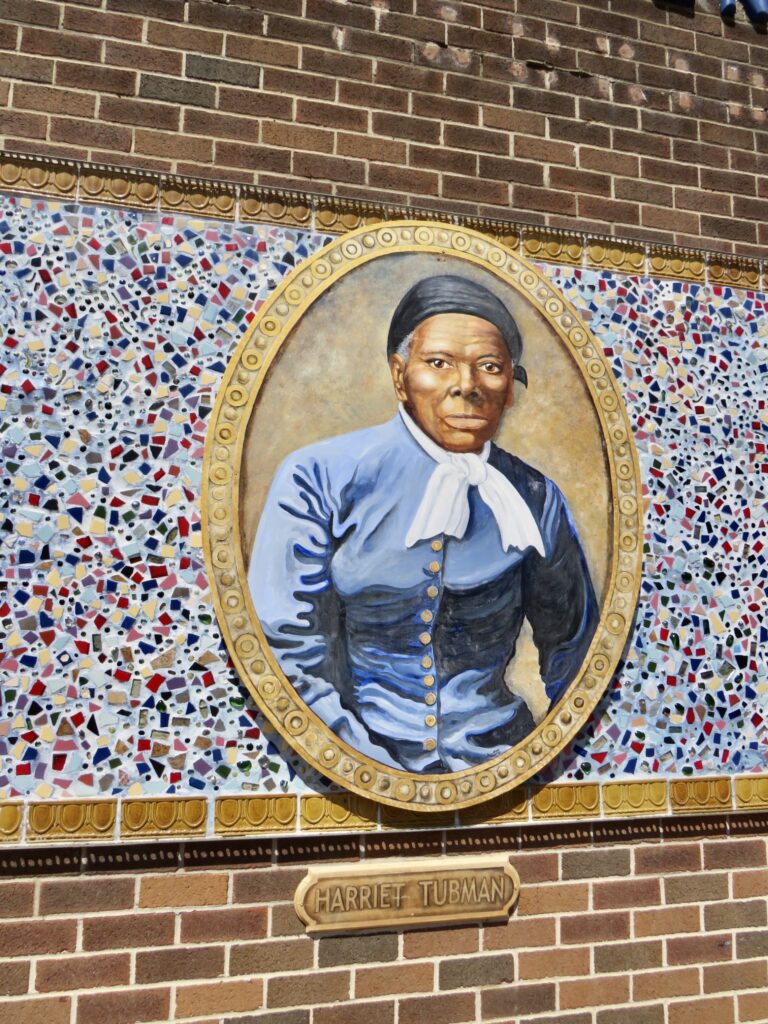
One of the most famous conductors on the Underground Railroad, Harriet Tubman escaped slavery in Maryland and eventually ended up in Auburn. 

Justin Harris, with Conductor Tours, took us on a walking tour of key Harriet Tubman locations. We started at the New York State Equal Rights Heritage Center and admired the Harriet Tubman statue outside. 

“This is the street she was known for riding her pig on the way to the market,” Harris noted.

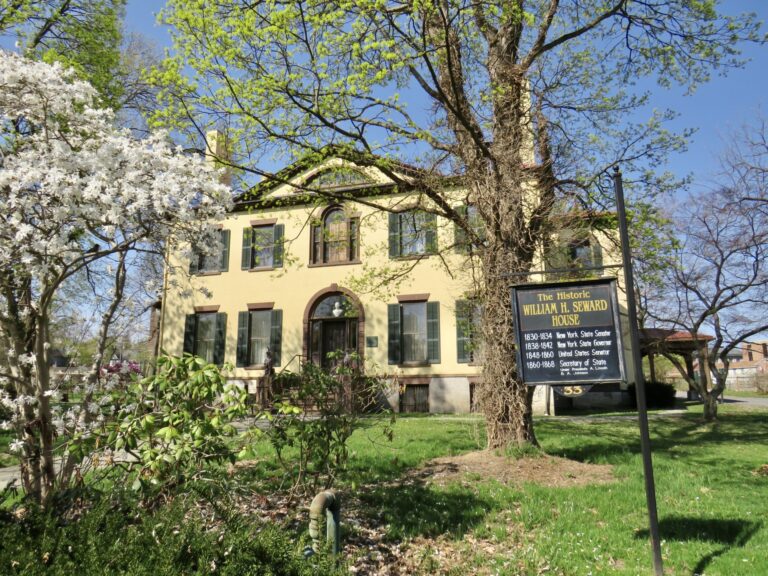
Passing the William H. Seward House Museum and Gardens, Harris explained that the former Secretary of State to Abraham Lincoln and his wife were friends of Tubman’s. Staunch abolitionists, they harbored many freedom seekers.

We also saw the Presbyterian Church where Tubman married Nelson Davis and AME Zion Church where she worshipped. The house where she lived was being restored, but we were able to take a peek around the home for the elderly she had built on her property.

Our final stop was Fort Hill Cemetery where she and some of her family are buried. 

Fighting the Fugitive Slave Act in Syracuse

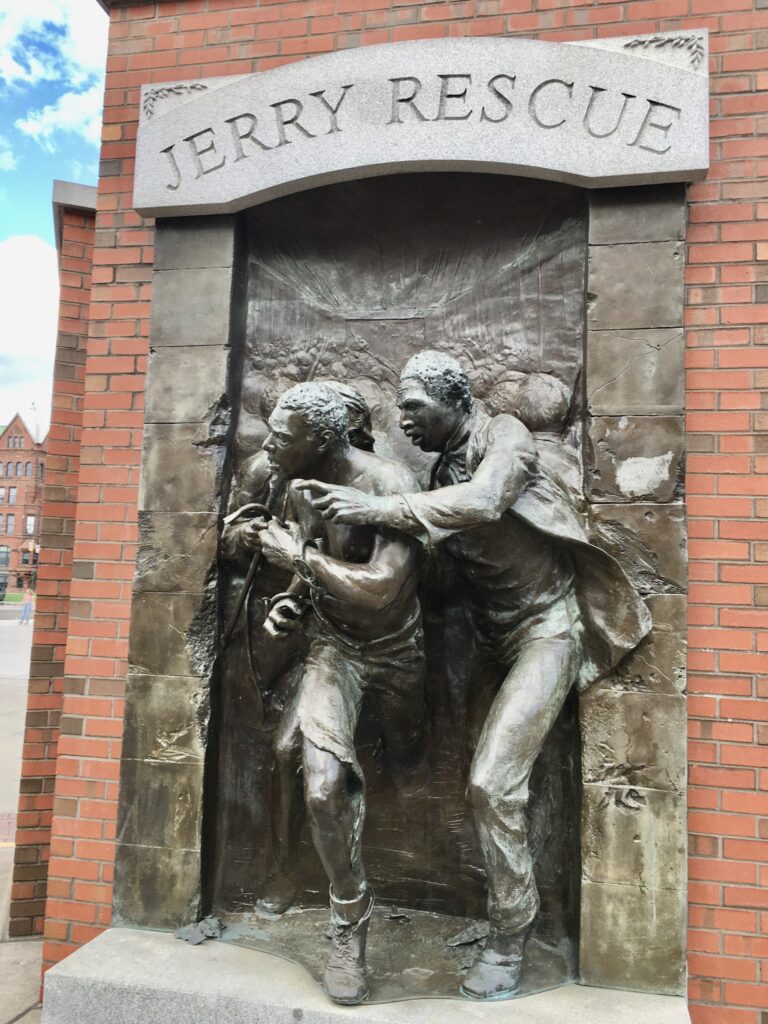
Our final stop was Syracuse. A highlight was the Jerry Rescue Monument in Clinton Square. It was created in honor of William Henry from Missouri. Henry’s mother was a slave owned by his father in Missouri. After his father died he was inherited by his father’s white step-son. Henry escaped to Syracuse where he worked at a cooperage. 

New York was a free state then, but the Fugitive Slave Act of 1850 allowed slave hunters to capture escapees and return them to owners in the South. Henry was recognized and his owner demanded him back. Brought before a judge, Henry was incarcerated. But, in defiance of the act, the citizens of Syracuse stormed his jail cell and helped him escape to Canada.

Bravery and determination helped shape the United States as a country that valued treating others with respect and dignity. 

Fighting for fairness was not easy then. And it’s not easy now. 

The Finger Lakes legacy reminds us why we can’t take the freedoms and rights we have now for granted.

6 lợi ích tuyệt vời của nước sả đối với sức khỏe

Sả được sử dụng như một loại thảo dược làm thuốc, khoa học cũng đã chứng minh một số công dụng của nước sả với sức khỏe.

Ngoài việc chữa nhiều bệnh thông thường như cảm lạnh hoặc làm dịu cơn khó chịu ở dạ dày, đau bụng và buồn nôn, nước sả còn giúp tăng cường hệ miễn dịch nhờ giàu chất chống oxy hóa.

Dưới đây là 6 lợi ích hàng đầu của nước sả.

1/Giảm nguy cơ ung thư

Chất citral trong sả có khả năng chống ung thư mạnh mẽ. Một số thành phần trong sả có thể gây chết tế bào hoặc tăng cường hệ miễn dịch để cơ thể có khả năng tự chống ung thư tốt hơn, theo Healthline.

2/ Giảm viêm, giảm đau khớp

Các hợp chất citral và geranial trong sả có tác dụng chống viêm, giúp giảm viêm trong cơ thể. Nước sả chứa các hợp chất có tác dụng chống viêm, giúp giảm viêm và đau do viêm khớp.

3/ Cải thiện tiêu hóa

Nước sả có thể làm dịu các vấn đề về tiêu hóa như khó tiêu, loét dạ dày, đầy hơi và táo bón. Nó giúp kích thích nhu động ruột và cải thiện tiêu hóa, điều trị chứng khó chịu ở dạ dày, đau bụng và các vấn đề tiêu hóa.

4/ Giảm cholesterol

Các nghiên cứu đã chỉ ra rằng nước sả giúp giảm mức cholesterol xấu LDL, do đó làm giảm nguy cơ mắc các bệnh tim mạch.

5/ Giảm huyết áp

Nghiên cứu cho thấy uống nước sả giúp giảm huyết áp và giảm đáng kể nhịp tim, nhờ khả năng làm giãn mạch máu, cải thiện lưu thông máu.

6/ Kháng khuẩn

Theo Trung tâm Ung thư Memorial Sloan Kettering (Mỹ), nghiên cứu cho thấy sả có khả năng ngăn ngừa nhiễm trùng. Giàu chất chống oxy hóa, nước sả giúp tăng cường hệ miễn dịch, chống lại nhiều chứng bệnh cũng như tình trạng nhiễm trùng. Nó còn có đặc tính kháng khuẩn giúp chống lại nhiều loại vi khuẩn và nấm hiệu quả. Uống nước sả thường xuyên giúp ngăn ngừa nhiễm trùng.

Tuy nhiên, một số người có thể bị dị ứng và gặp tác dụng phụ như chóng mặt hoặc khô miệng khi uống nước sả. Do đó, bạn nên tham khảo ý kiến bác sĩ trước khi dùng nước sả cũng như các thức uống thảo khác.

6 lý do nên ăn bí đỏ thường xuyên

Giàu chất xơ và các khoáng chất cần thiết cho cơ thể, bí đỏ giúp tăng cường sức đề kháng, tăng cường thị lực và nhiều công dụng khác.

Dưới đây là 6 lý do bạn nên thêm bí đỏ vào bữa ăn thường xuyên.

1/ Tăng cường sức khỏe tim mạch

Kali, vitamin C, chất xơ và hàm lượng chất chống oxy hóa cao trong bí đỏ có lợi cho sức khỏe tim mạch. Theo Tạp chí Tim mạch Quốc tế, kali trong bí đỏ giúp ổn định huyết áp. Chất xơ trong bí đỏ làm giảm cholesterol và kiểm soát nguy cơ mắc bệnh tim mạch.

2/ Làm đẹp da

Bí đỏ chứa vitamin A, vitamin C và vitamin E. Vitamin A trong bí đỏ giúp bảo vệ tế bào da khỏi bị tổn thương do tia UV có hại. Vitamin C cần thiết để sản xuất collagen và hydrat hóa da. Vitamin E là chất chống oxy hóa mạnh giúp bảo vệ chống lại tổn thương gốc tự do trên da.

3/ Cung cấp chất xơ cho cơ thể

Bí đỏ có thể đáp ứng lượng chất xơ khuyến nghị hàng ngày của bạn, tức là khoảng 28 gram trong chế độ ăn 2.000 calo một ngày. Bí đỏ có thể giúp ích cho hệ tiêu hóa và tăng cường sức khỏe đường ruột. Chất xơ trong bí đỏ cũng có lợi trong việc loại bỏ cholesterol, cân bằng lượng đường trong máu và làm no lâu hơn.

4/ Giúp mắt sáng khỏe

Bí đỏ có giàu beta-carotene, là hợp chất chống oxy hóa giúp mắt sáng khỏe. Ngoài ra, nguồn cung lutein và zeaxanthin dồi dào trong bí đỏ giúp giảm nguy cơ thoái hóa điểm vàng và đục thủy tinh thể do tuổi tác.

5/ Giảm nguy cơ mắc bệnh hen suyễn

Theo một vài nghiên cứu, việc tiêu thụ nhiều thực phẩm giàu beta-carotene (như bí đỏ, khoai lang, cà chua và cà rốt) giúp làm giảm tỉ lệ mắc bệnh hen suyễn. Vitamin A được chuyển hóa từ beta-carotene trong bí đỏ có thể giúp cải thiện chức năng phổi.

6/ Tăng sức đề kháng

Giàu vitamin A và C nên bí đỏ có khả năng tăng cường sức đề kháng của cơ thể. Hàm lượng beta-carotene trong bí đỏ có thể được chuyển hóa thành vitamin A, giúp tăng cường hệ thống miễn dịch và chống lại nhiễm trùng.