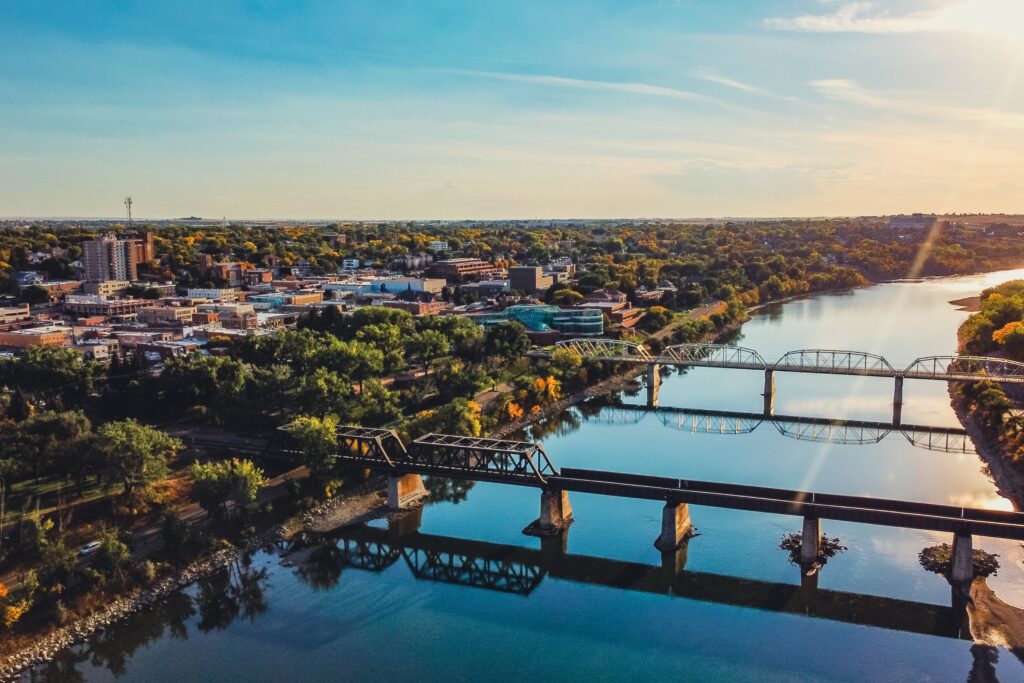
Nestled between the Pacific Ocean on one side and lush forests, rushing creeks, and hidden waterfalls on the other, North Vancouver offers a rare blend of urban convenience and wild natural beauty. It was recently ranked Canada’s most livable city by The Globe and Mail, based on factors like amenities, climate, and overall quality of life.
Though it’s among the country’s most expensive cities, the perks are undeniable. Deep Cove exudes small-town charm with its waterfront streets, boutique shops, and the famous treats at Honey Doughnuts. Locals and visitors alike can rent kayaks, try stand-up paddleboarding, or simply soak in the breathtaking scenery.
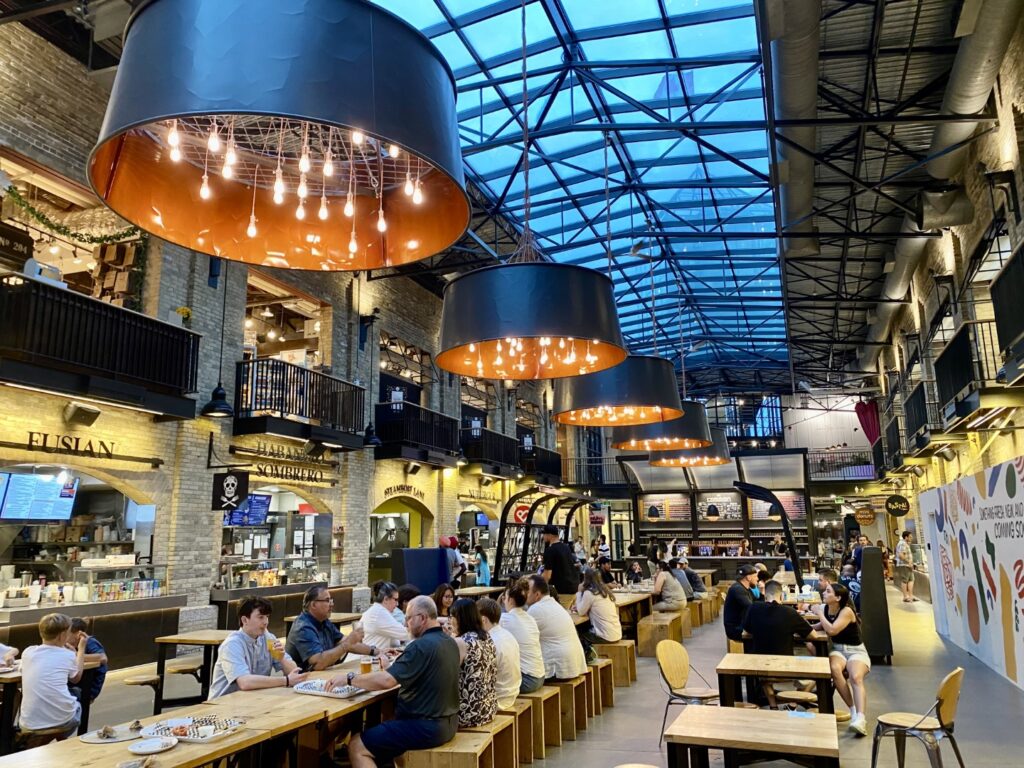
For a more vibrant atmosphere, Lower Lonsdale is buzzing with cafés, trendy restaurants, fashion boutiques, food trucks, and a lively summer night market. Popular spots like Earnest Ice Cream and The Quay Market & Food Hall are constant crowd-pleasers.
Nature is always just minutes away. Hiking and skiing at Grouse Mountain or Mount Seymour provide spectacular year-round adventures. Nearby Lynn Canyon Park and Lynn Headwaters Regional Park offer suspension bridges, natural swimming holes, and waterfalls such as the 7 km Norvan Falls trail — the perfect escape into the wild. From early morning hikes through ancient forests, coffee breaks in Deep Cove, and dinners at the Shipyards, to evening strolls along the waterfront with ice cream in hand, North Vancouver embodies the ideal balance between city living and awe-inspiring nature.
Báo cáo mới từ MoneySense đã phân tích chi phí sinh hoạt ở 78 thành phố Canada, bao gồm nhà ở, thực phẩm, vận chuyển, thuế và các chi phí khác, nhằm ước tính thu nhập cần thiết để có cuộc sống “thoải mái”. Trong tất cả các thành phố được phân tích, chi phí sống thoải mái đều cao hơn chi phí sinh hoạt trung bình.
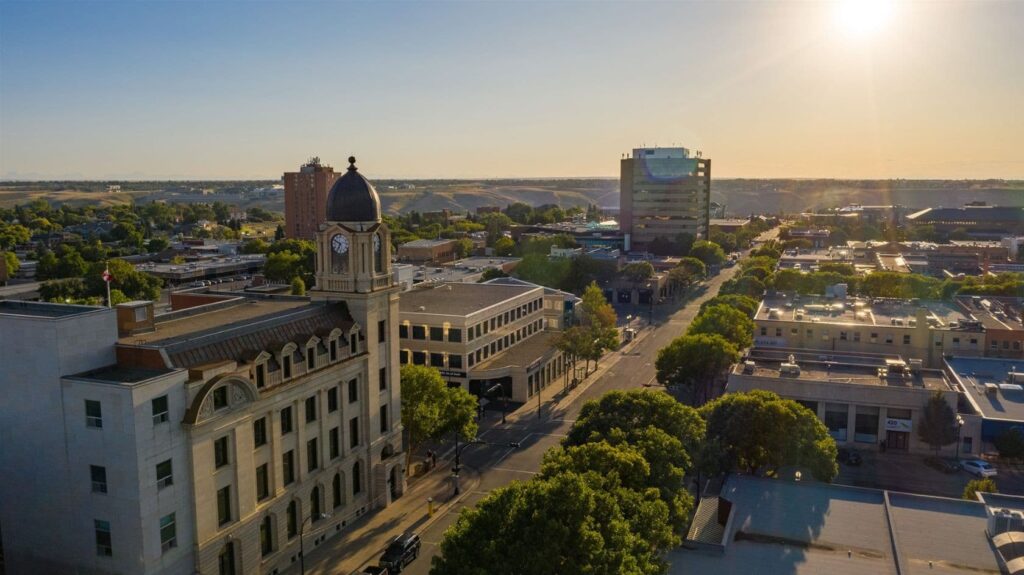
Tuy nhiên, các thành phố vừa và nhỏ của Alberta nổi bật về mức chi phí hợp lý. Medicine Hat xếp thứ ba trong danh sách các thành phố rẻ nhất Canada, nơi một người sống độc thân chỉ cần khoảng $70,416 mỗi năm để sống thoải mái. Lethbridge xếp thứ tám, với chi phí sống thoải mái khoảng $73,608 mỗi năm.
Medicine HatLethbridge
Những thành phố này cho thấy bạn không cần sống ở các trung tâm đô thị lớn của Canada để có chất lượng cuộc sống tốt. Trong khi tỉnh láng giềng British Columbia là nơi có nhiều thành phố đắt đỏ nhất, Alberta lại cung cấp mức sống hợp lý hơn ở các đô thị nhỏ.
A new MoneySense report analyzed the cost of living in 78 Canadian cities — factoring in housing, food, transportation, taxes, and other expenses — to estimate the annual income needed for a “comfortable” lifestyle. Across all the cities surveyed, the income required for comfort was higher than the basic cost of living.
However, smaller and mid-sized cities in Alberta stood out for affordability.
Medicine HatLethbridge
Medicine Hat ranked third overall among the cheapest Canadian cities, where a single person needs about $70,416 per year to live comfortably.
Lethbridge came in eighth, with an estimated cost of $73,608 per year. These cities highlight that you don’t have to live in Canada’s largest urban centers to enjoy a good quality of life. While neighboring British Columbia is home to many of the country’s most expensive cities, Alberta offers far more affordable living in its smaller urban hubs.
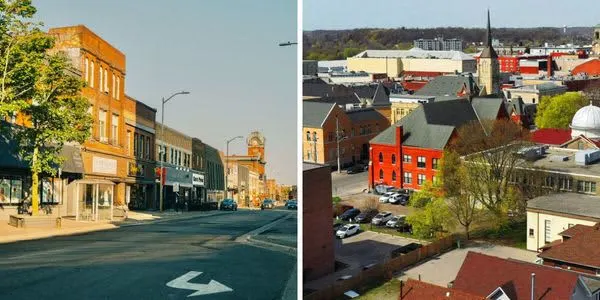
Personal finance platform MoneySense has just released a new report on the cost of living across 36 major cities in Ontario, highlighting dramatic differences in the annual income required to live comfortably.
The study calculated the yearly earnings a single renter would need to cover essentials like housing, food, transportation, and entertainment — along with taxes, savings, and a small buffer. The results may surprise you.
Ontario’s Most Expensive Cities
At the top of the list is Richmond Hill, where you’d need an income of $106,536 per year to live “comfortably.” Close behind are Milton and Whitby. Toronto doesn’t claim the #1 spot but still ranks as the fifth most expensive city in Ontario, requiring nearly $98,880 annually.
Other GTA cities such as Mississauga, Markham, and Vaughan also top $90,000 a year, showing just how costly life in this region can be.
Mid-Tier Options
Cities like Ottawa, Hamilton, Waterloo, and London strike more of a balance, with annual income needs ranging from $84,700 to $91,400. These spots offer a middle ground between affordability and access to jobs and services.
The Most Affordable Cities
For those looking to stretch their dollars further, the cheapest cities in Ontario include:
Sault Ste. Marie – $72,744
Sarnia – $74,208
Brantford – $80,064
Greater Sudbury – $81,480
That’s a gap of more than $33,000 a year compared to Richmond Hill — a huge difference for anyone thinking seriously about their finances.
A Reality Check from MoneySense
The report also points out that even full-time minimum wage workers would struggle to get by in Ontario’s priciest cities, underscoring how critical it is to choose where you live wisely.
In short, where you live in Ontario has a massive impact on your spending power. Leaving the GTA could mean not just a more affordable lifestyle, but also greater financial security and peace of mind.
Nền tảng tài chính cá nhân MoneySense vừa công bố báo cáo chi phí sinh hoạt cho 36 thành phố lớn tại Ontario, cho thấy sự khác biệt đáng kể về mức thu nhập cần thiết để sống thoải mái.
Báo cáo đã tính toán mức thu nhập hàng năm mà một người thuê nhà đơn lẻ cần để chi trả cho nhu yếu phẩm như nhà ở, thực phẩm, phương tiện đi lại và giải trí — cùng với thuế, tiết kiệm và một khoản dự phòng nhỏ. Kết quả có thể khiến nhiều người bất ngờ.
Thành phố đắt đỏ nhất Ontario là Richmond Hill, với mức thu nhập “thoải mái” khoảng $106,536/năm. Milton và Whitby đứng ngay sau, trong khi Toronto xếp thứ năm trong tỉnh, cần gần $98,880/năm. Các thành phố khác trong vùng GTA như Mississauga, Markham và Vaughan cũng đều trên mức $90,000.
Những thành phố tầm trung như Ottawa, Hamilton, Waterloo và London cần mức thu nhập từ khoảng $84,700 đến $91,400/năm, cung cấp sự cân bằng giữa khả năng chi trả và tiếp cận việc làm, dịch vụ.
Đối với những ai muốn tận dụng tối đa ngân sách, các thành phố rẻ nhất gồm Sault Ste. Marie ($72,744), Sarnia ($74,208), Brantford ($80,064) và Greater Sudbury ($81,480). Khoảng cách $33,000 so với Richmond Hill là một con số đáng kể đối với những người cân nhắc tài chính.
MoneySense lưu ý rằng ngay cả những người làm lương tối thiểu cũng sẽ cần làm nhiều công việc toàn thời gian để sống tại các thành phố đắt đỏ nhất, nhấn mạnh tầm quan trọng của việc lựa chọn nơi ở một cách khôn ngoan. Vì vậy, nơi bạn sinh sống tại Ontario ảnh hưởng lớn đến khả năng chi tiêu của bạn — và rời khỏi vùng GTA có thể mang lại cuộc sống thoải mái và an toàn tài chính hơn.
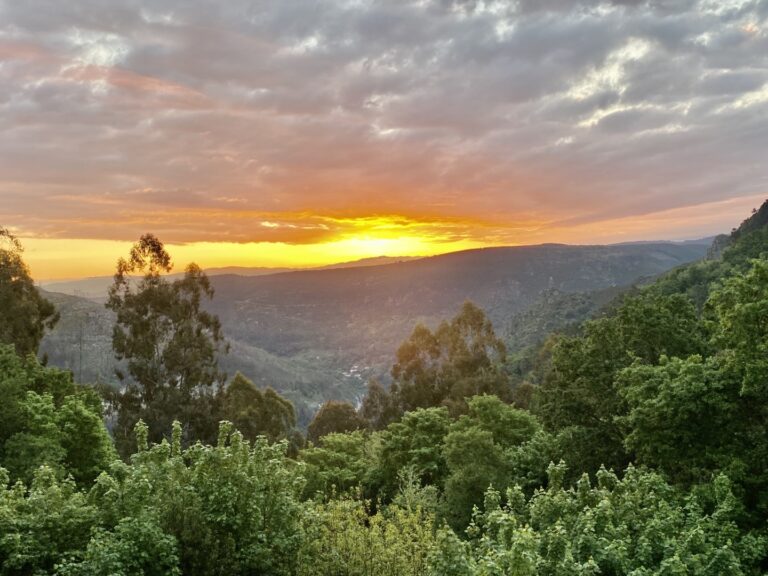
I touched down in Porto after a 6.5-hour flight from Canada, still shaking off the jet lag but already buzzing with anticipation. Ahead of me was Galicia, Spain’s northwestern corner—a land whispered about in legends, steeped in Celtic mysticism, and kissed endlessly by the Atlantic. The bus ride north took just two hours, crossing the River Miño into a landscape of granite peaks, oak forests, and terraced vineyards that seemed to tumble toward the sea.
From Porto, a bus whisked us two hours north, across the River Miño (a watery boundary between Portugal and Spain) and into Galicia—a lush, green hideaway. My guide, the ever-energetic and endlessly patient Maria Chamadoira, reminded us that Galicia is “the land of water.” And she wasn’t kidding: nine different companies bottle it, hot springs bubble up everywhere, and there are 1,500 kilometers of salty coastline. You can’t throw a scallop shell here without hitting some form of H₂O.
First Stop: Tui and the Wild Horse
Our maiden Galician town was Tui, a historic stop on the Camino de Santiago pilgrimage route that begins in Portugal. María explained that Galicia is not defined by one Camino but many. These include the Camino Francés, Camino Portugués, and Camino del Norte, and all converge at Santiago’s famed cathedral and the shrine of Saint James. Even for those who aren’t pilgrims, the rhythm of the Camino lingers in the stones, the streets, and the kitchens.
Our group was more focused on the pilgrimage of the stomach. Lunch was at O Novo Cabalo Furado—which translates to “The New Wild Horse.” The name is fitting, since the hills around Galicia still hold wild horses, rounded up every July during the Rapa das Bestas festival, when locals bravely (and barehandedly) trim their manes and tails.
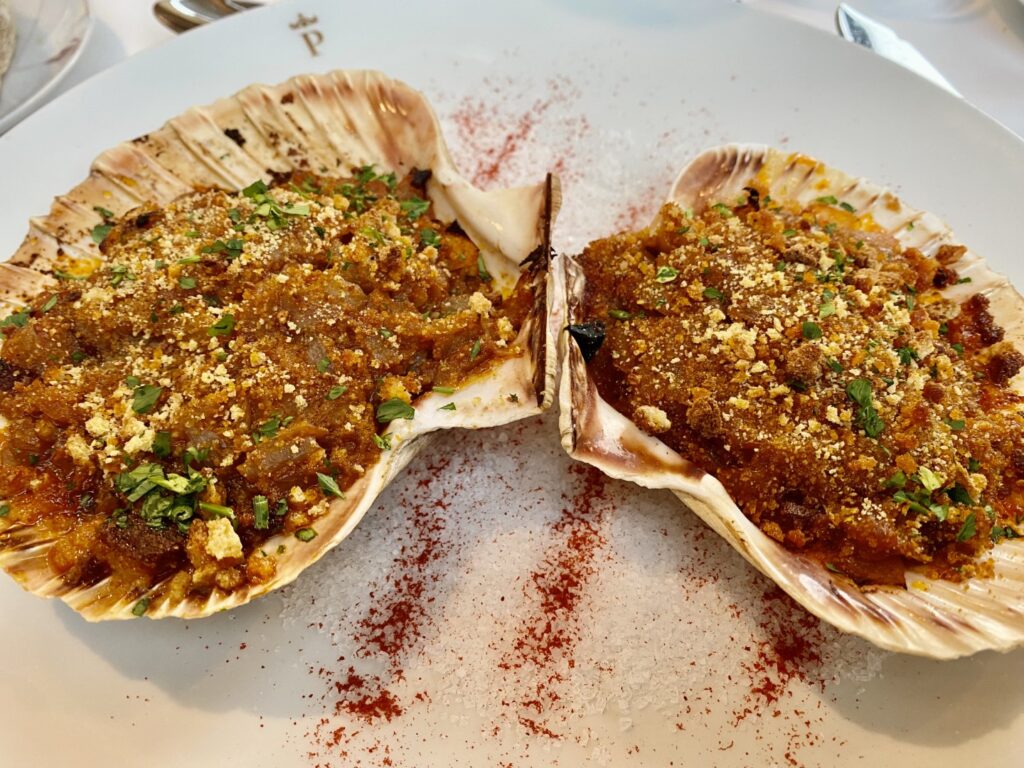
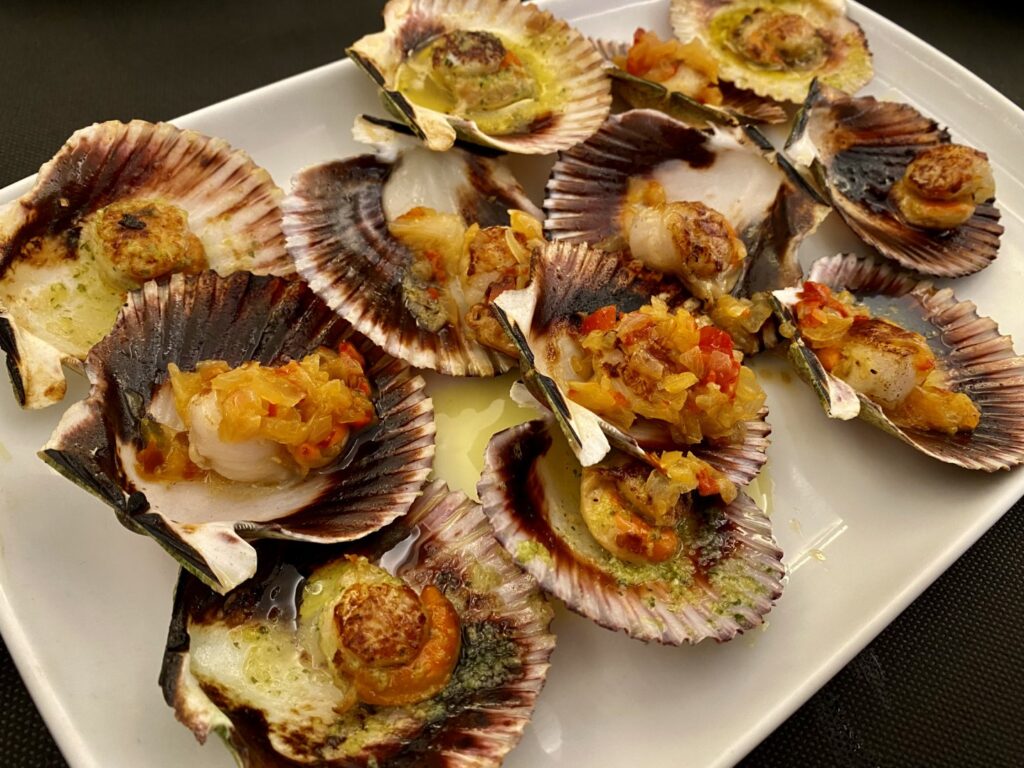
At the restaurant, I dove headfirst into scallops—called zamburiñas—paired with a crisp Ribeiro wine made from the Treixadura grape.
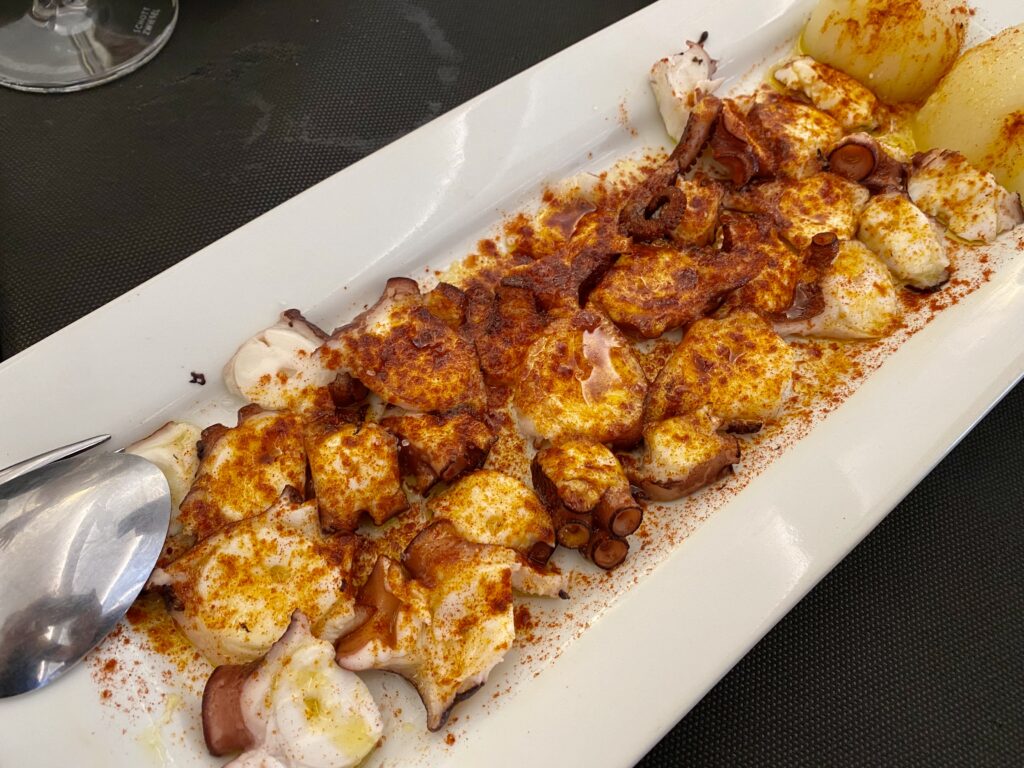
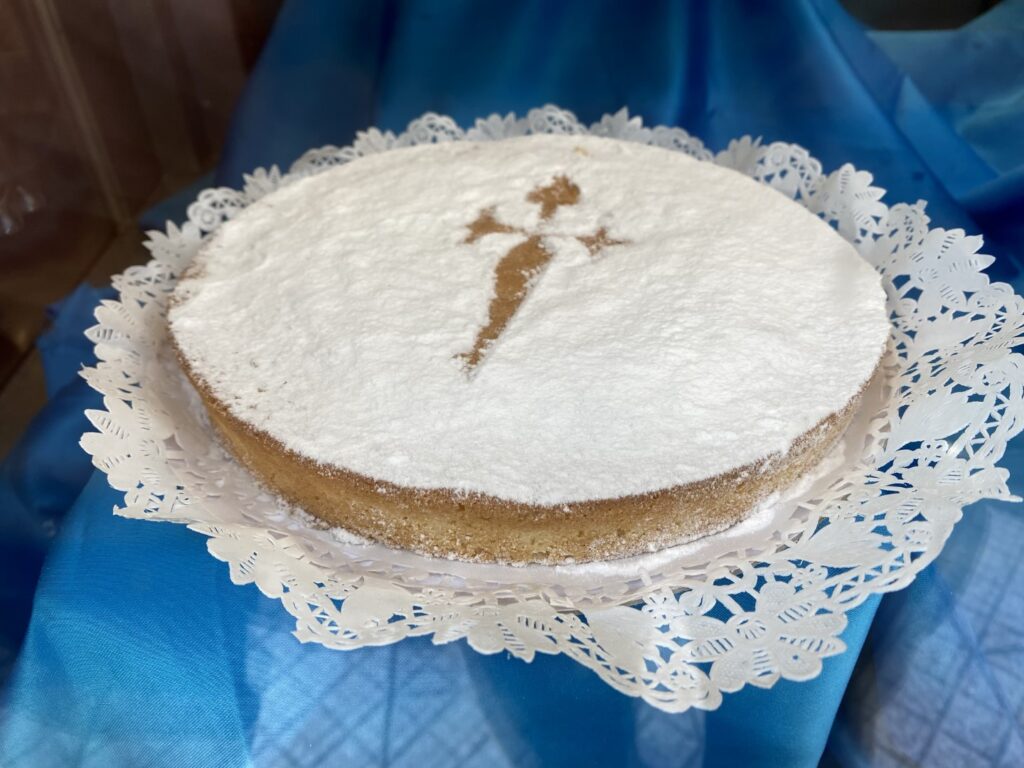
Then came the star of Galician cuisine: octopus. Pulpo a la gallega is simplicity perfected—boiled until tender, then dressed with olive oil, coarse salt, and a dusting of smoky paprika. It’s sliced into bite-sized coins and served on wooden plates, where it vanishes with alarming speed. Added to the meal were croquettes with creamy béchamel sauce and ham. Dessert was a Santiago cake made with almonds, sugar, eggs, and a sprinkle of powdered sugar outlining the cross of St. James.
I quickly realized two things: one, Galicians know how to eat; and two, lunch is a serious business. Restaurants open at 2 p.m., and by the time dessert rolls around, it’s late afternoon. Dinner? Don’t even think about it until 9 or 10 p.m. In summer, the sun doesn’t set until 10:30, so you basically follow the light around the clock.
Stone, Forests, and Sweet Chestnuts
Waddling around Tui after lunch, I noticed something: everything here seems to be made of granite. The mountains are granite, the houses are granite, even the benches where I sat to recover from too much octopus were granite. Subway systems don’t exist here—not because Galicia is small, but because the granite makes drilling tunnels nearly impossible.
Surrounding us were oak and chestnut forests. Chestnuts are a big deal in Galicia—sweet, plentiful, and celebrated each autumn during harvest festivals. Locals used them as a starch before potatoes arrived from the New World.
Sleeping Like a Monk (Almost) at the Parador Santo Estevo
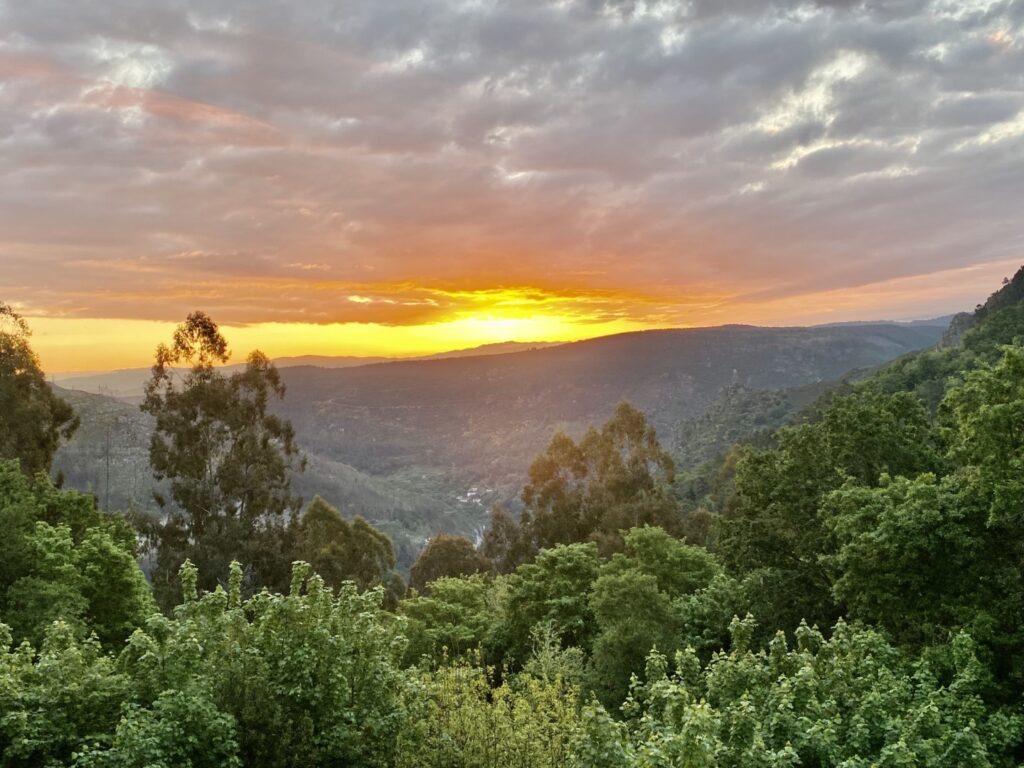
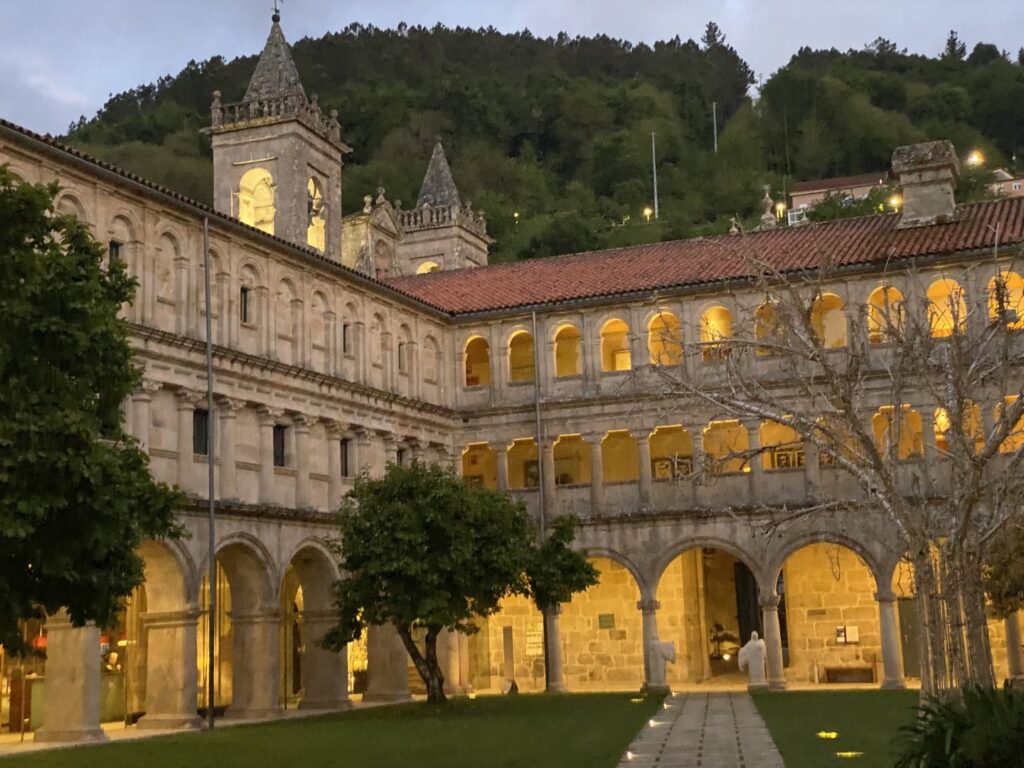
If Galicia has a secret magnet for luring visitors, it’s the paradores—historic castles, monasteries, and noble houses transformed into hotels. Our first stay was in the Parador Santo Estevo, a former Benedictine monastery tucked deep in the Ribeira Sacra region. Getting there wasn’t easy—our little bus squeezed through tight mountain roads—but once we arrived, the air shifted. The whole place radiated tranquility, as if the centuries of prayer and chestnut trees had seeped into the walls.
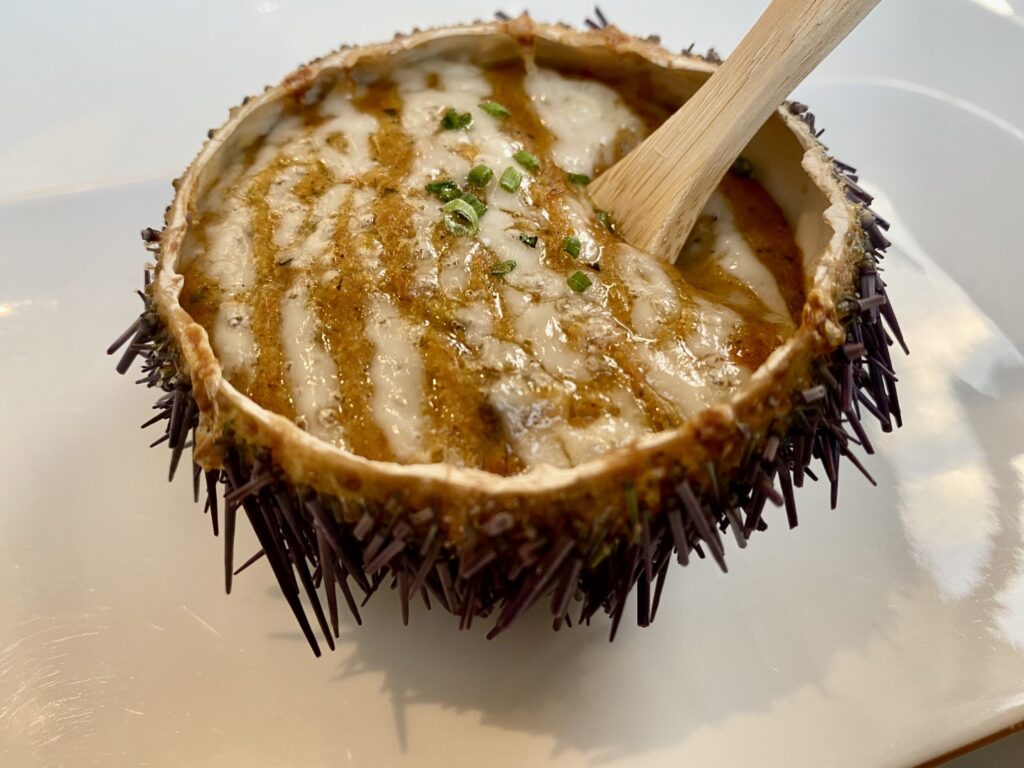
Inside, cloisters with Romanesque arches surrounded us, while the refectory (once where monks dined) now served dinner to grateful travelers like me. That night, I tried sea urchin scooped with a wooden spoon, and scallops baked in their shells with onion, breadcrumbs, and pimento. The food here feels both ancient and timeless, like the landscape itself.
Walking through the oak forest surrounding the parador the next morning, Maria told us of the Santa Compaña—ghostly processions of lost souls said to haunt these woods. If you meet them, she warned, give them a coin or risk having your soul snatched. I made a mental note to always keep spare change in my pocket—just in case.
Wine on the Edge
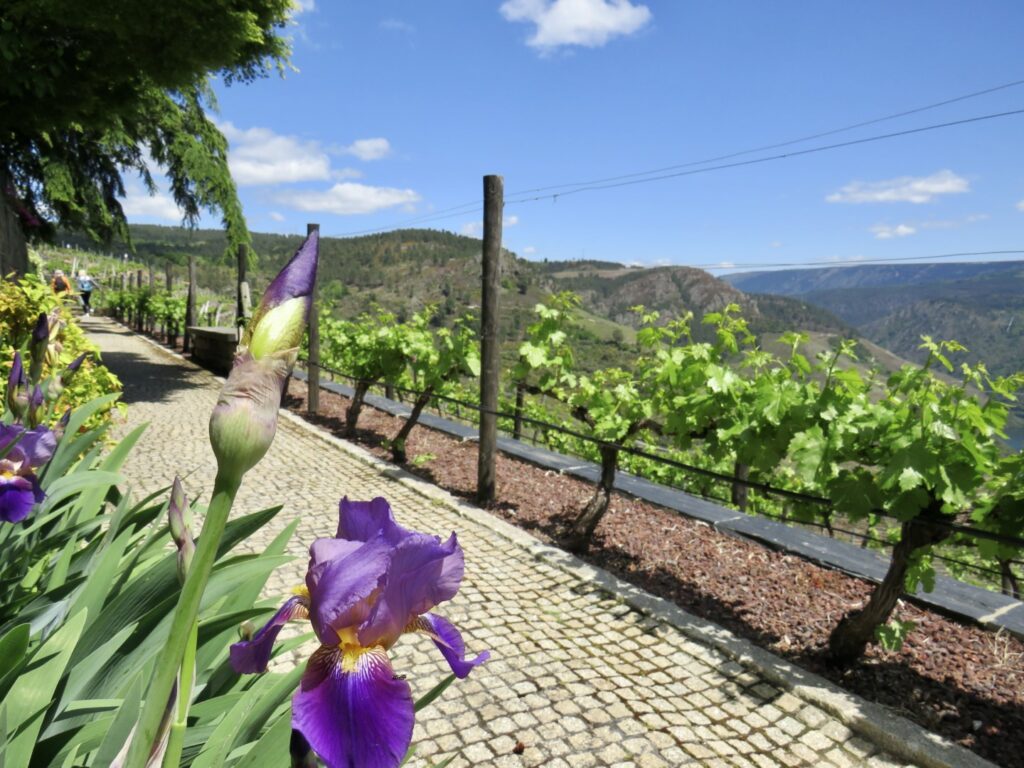
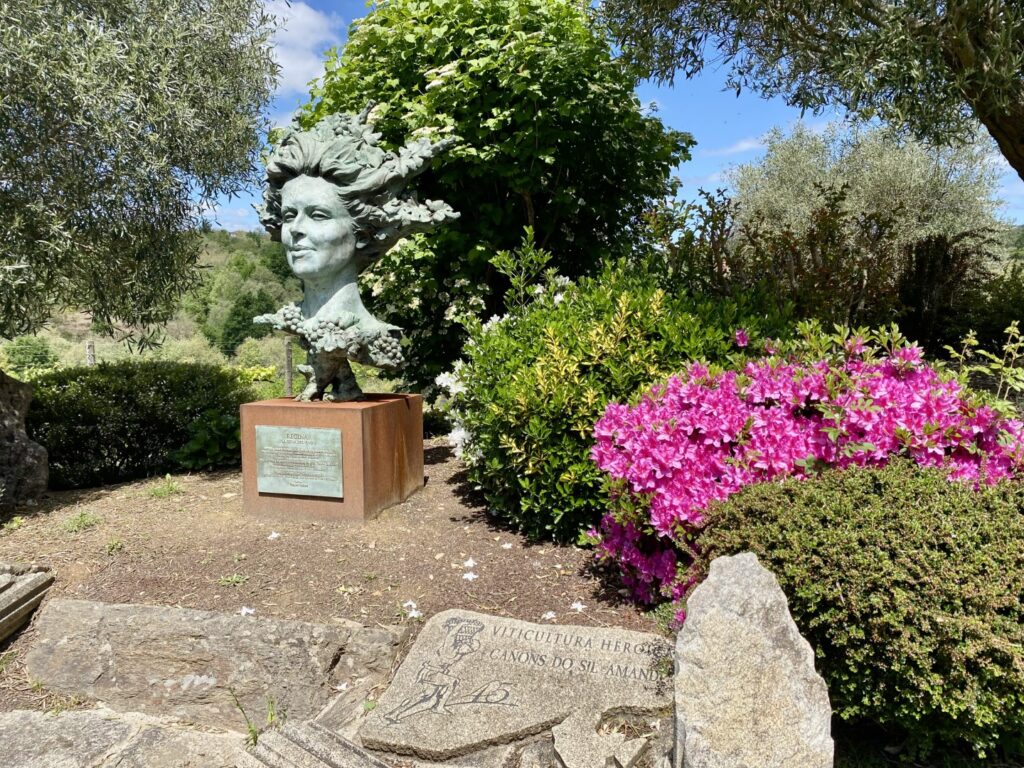
The Ribeira Sacra region is a landscape of heroic viticulture—literally. Vineyards cling to vertigo-inducing terraces along the Sil and Miño rivers, so steep that harvesters must scramble up and down carrying 20-kilo boxes of grapes. Locals call this “heroic” farming, and after seeing the cliffs, I understood why.
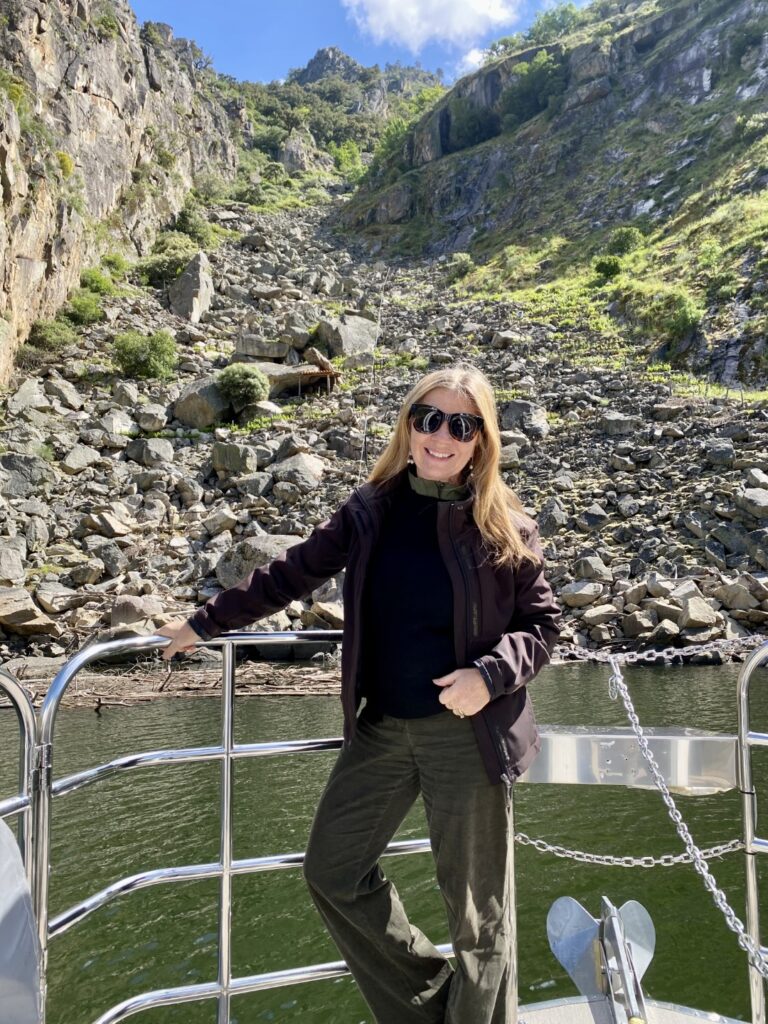
We boarded a river cruise with Captain Xoan Fraga, who poured us ruby-red Mencía wine as we floated past terraced vineyards. We nibbled on bica cake, a chestnut-sweetened sponge with a crunchy top, while our guide explained that over 50 grape varieties once thrived in the area. Many are being revived, though Mencía is still the headline act.
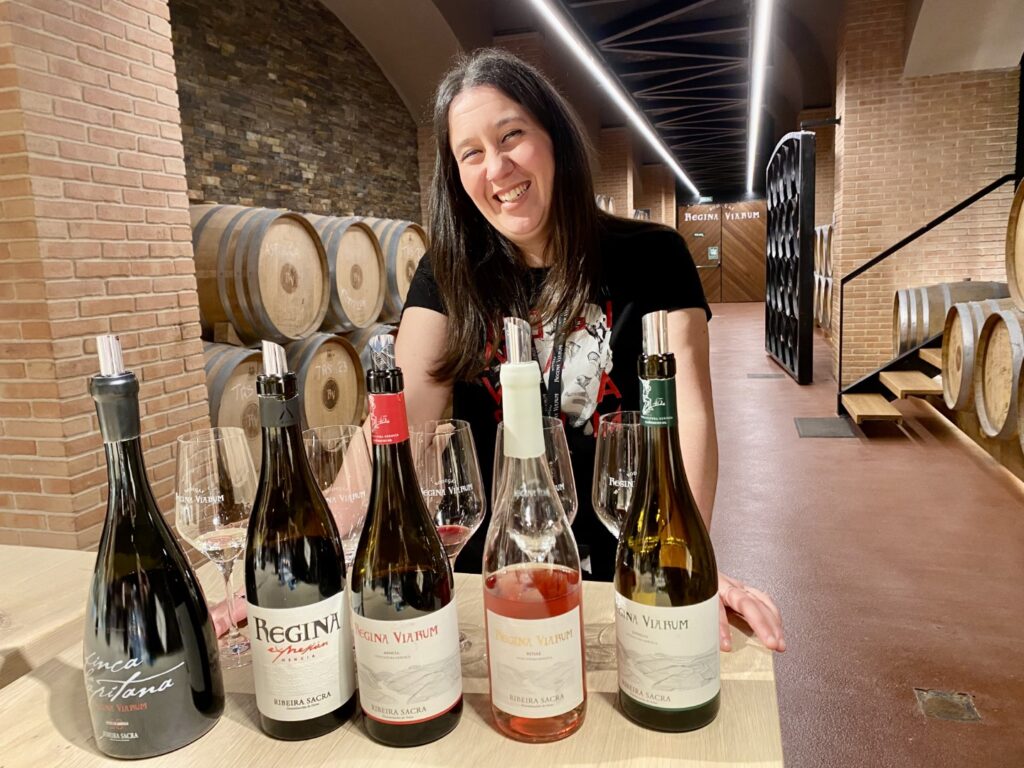
At Regina Viarum Winery, tasting guide Gema Abijón sat us down to sample their vintages.
“Our wines meet strict criteria. A minimum of 350 meters altitude, steep inclines, and all hand-harvested. That’s what makes them heroic wines.”
One sip and I found that to be deliciously so.
Lunch at Adega Algueira drove home Galicia’s “eat local” philosophy: empanadas stuffed with scallops and dogfish, veal shank with chestnuts, and flan with chocolate liqueur.
“Most families have animals and gardens here. We chop our own wood for fire. And we like to eat what we produce,” enthused restaurant manager Suso Somiera.
Myths, Magic, and Celtic Roots
Galicia is Spain, yes—but it’s also something else entirely. It has deep Celtic roots that still pulse through its culture. Bagpipes (brought centuries ago from Africa and India) wail during festivals. On June 23rd, bonfires blaze for the summer solstice, with locals leaping over flames seven times for luck, then rinsing off in seven sacred waters. Pagan rituals blend seamlessly with Catholic traditions—Saint James in Santiago, the Virgin Peregrina in Pontevedra, and ghostly Santa Compaña wandering forests at night.
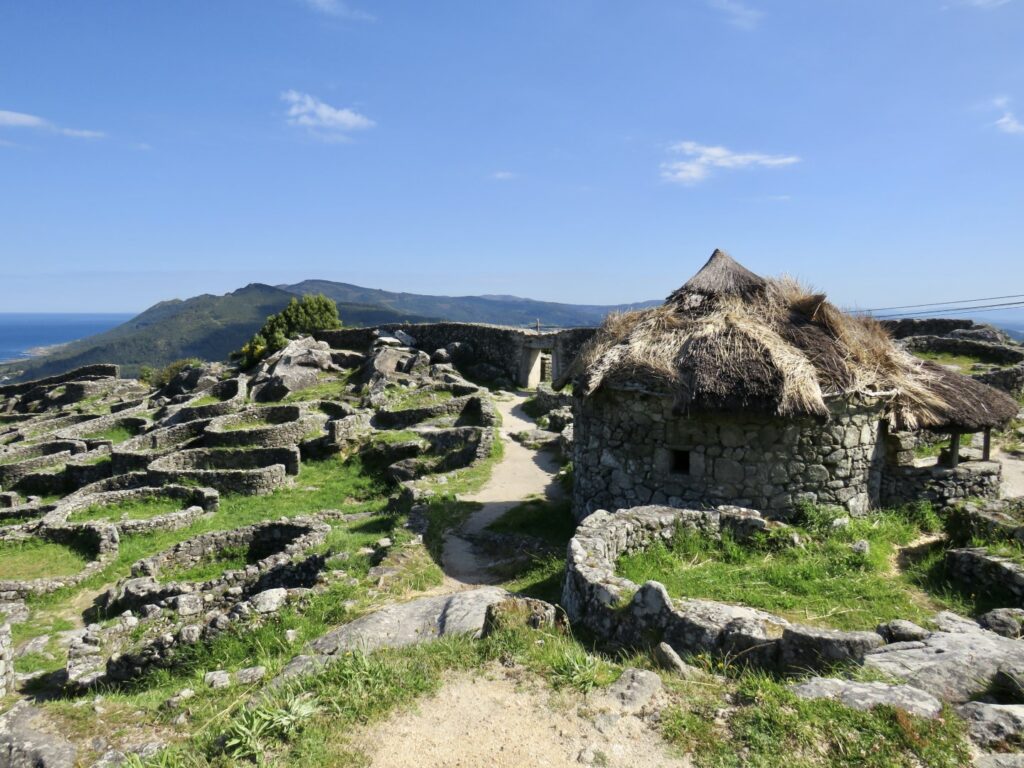
At Monte Santa Trega, perched 341 meters above the Atlantic at the mouth of the Miño River, we explored ancient castros—Celtic hillfort villages with round stone huts. Archaeologists have linked DNA between Galicians and the Celts of Britain, which might explain why this land feels both Spanish and something otherworldly. Standing there, staring out at the sea, I could see why Romans once thought this was literally the “end of the world.”
Mussels, Barnacles, and Other Seafood Adventures
Galicia is half land, half sea—and the seafood here is legendary. Picture this: 3,500 floating platforms in the rías (estuaries), each one sprouting mussels on ropes, weighed down by granite. Up to 250 kilos of mussels grow on each rope and are harvested after 18–22 months.
Then there are barnacles—or percebes. Harvested by daredevils clinging to wave-battered rocks, they’re expensive, ugly, and a highly prized delicacy. Galicians cook them quickly in seawater until they taste like a shot of the ocean itself.
At one dinner, I sampled caldo gallego, a hearty broth of turnip greens, potatoes, and salt pork—known to “revive the dead.” Between that, salads studded with pomegranate, chestnut-laced cakes, and glasses of Albariño, I found Galician cuisine to revive the living too.
The Cíes Islands: Spain’s Caribbean (With Seagulls)
If Galicia’s mainland wasn’t already seductive enough, its offshore islands seal the deal. Legend says Sir Francis Drake hid treasure in these coves, and looking at the sparkling water, I could believe it.
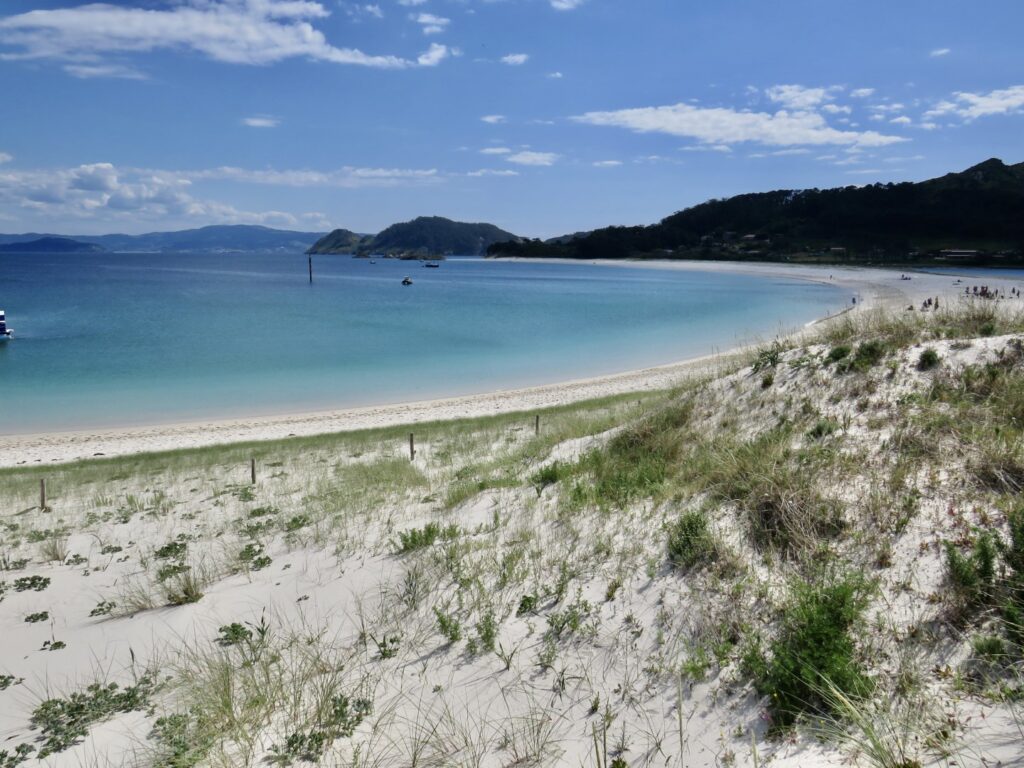
The Cíes Islands, part of a national park, are a ferry ride from Vigo and boast Playa de Rodas—voted one of the best beaches in the world by The Guardian. With turquoise waters, fine white sand flecked with mica, I understood the ranking. Unfortunately, it caused overtourism, and now there is a strict cap of 1,800 visitors per day in summer. After all, it is a national park and protected area for roosting waterfowl, including yellow-legged gulls.
Santiago de Compostela: Journey’s End
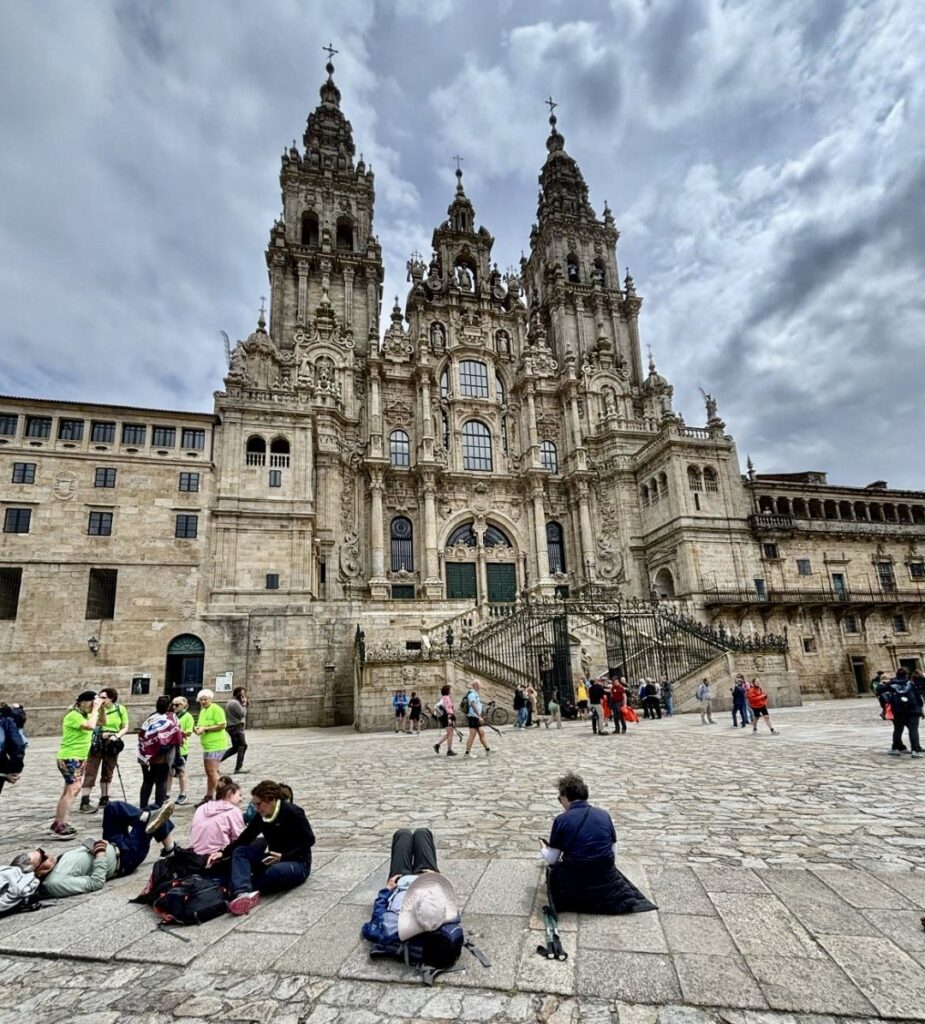
Finally, we reached Santiago de Compostela, the capital of Galicia and endpoint of the Camino de Santiago pilgrimage. The city hums with energy: tired but elated pilgrims, bell towers chiming, the smell of octopus wafting from kitchens.
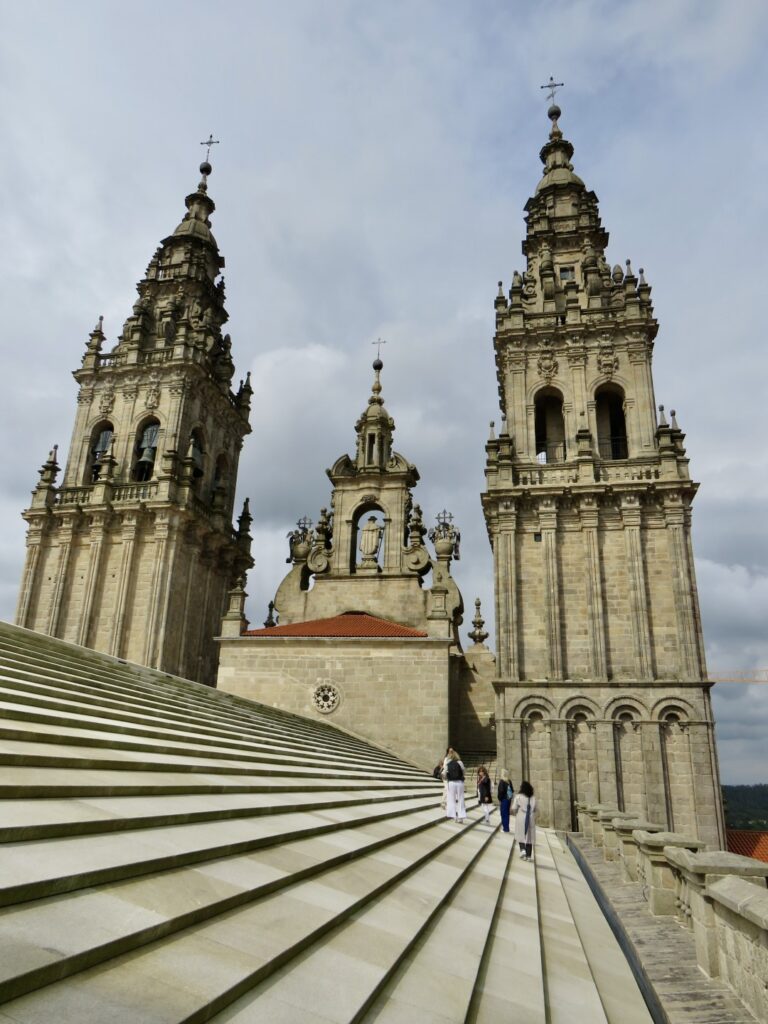
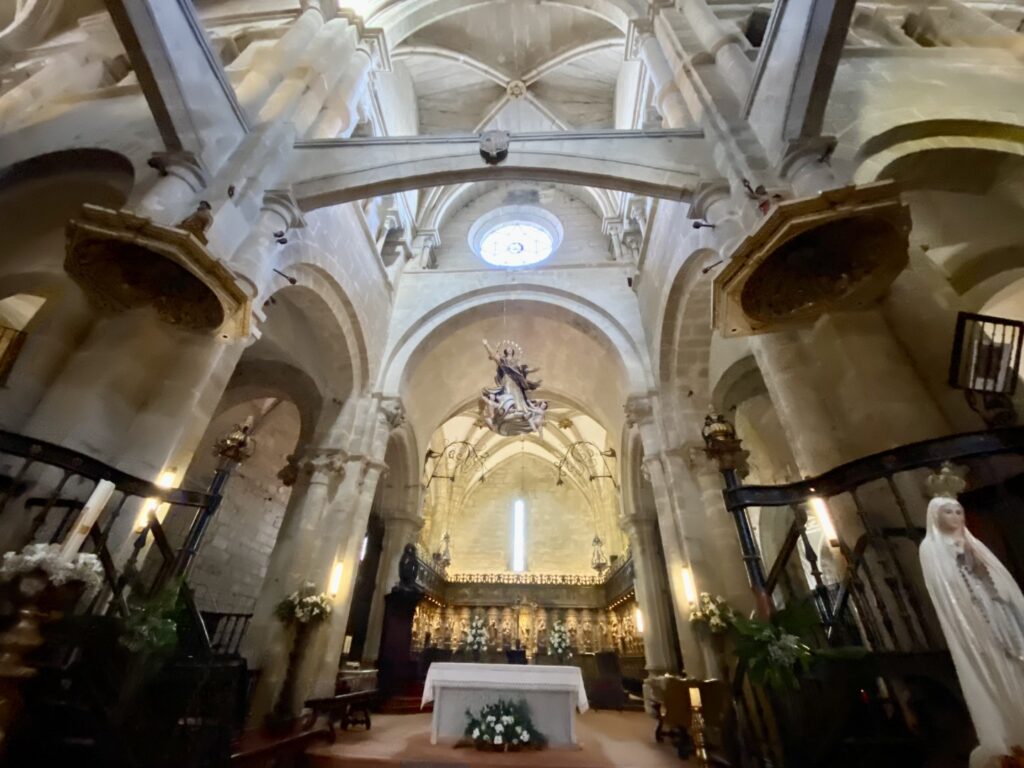
Inside the cathedral, pilgrims embrace the statue of Saint James, often with tears streaming down their faces. Even non-religious travelers can feel the weight of centuries here. On the rooftop tour, I looked out over the granite rooftops and felt the Atlantic breeze. For a moment, I understood why people walk hundreds of kilometers just to arrive at this spot: it’s not about the destination, it’s about the transformation along the way.
And then, naturally, we went to eat. Lunch at the Parador—once a pilgrim hospital—brought mussels with apple slices, pork crepes, and sea bream, followed by Santiago cake.
“In Galicia,” Maria reminded us, “when we are sad, we eat. When we celebrate, we eat.” I couldn’t think of a better philosophy.
By the time I left, I felt like I’d uncovered a secret. Galicia is Spanish, yes, but also proudly itself—wild, mystical, generous, and delicious.
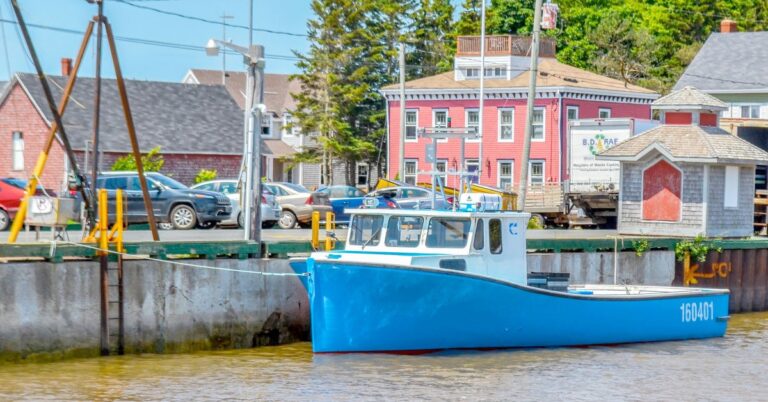
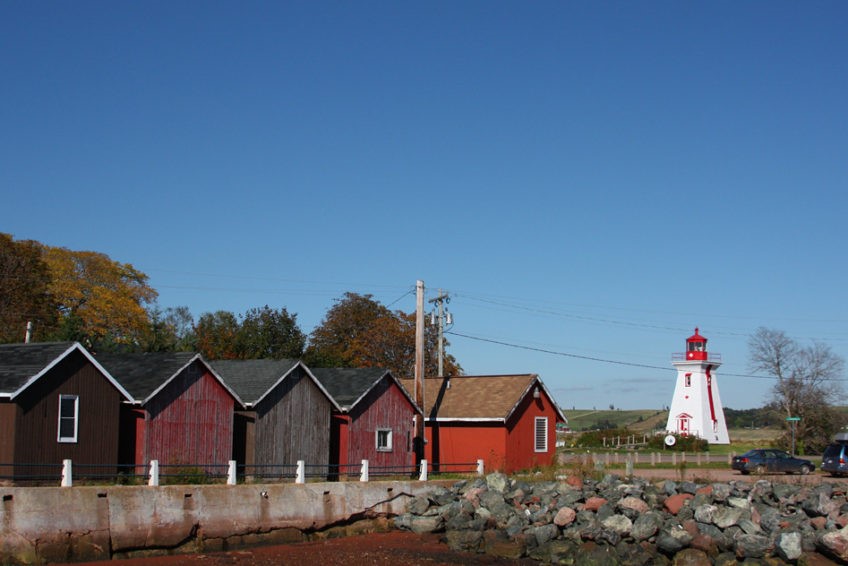
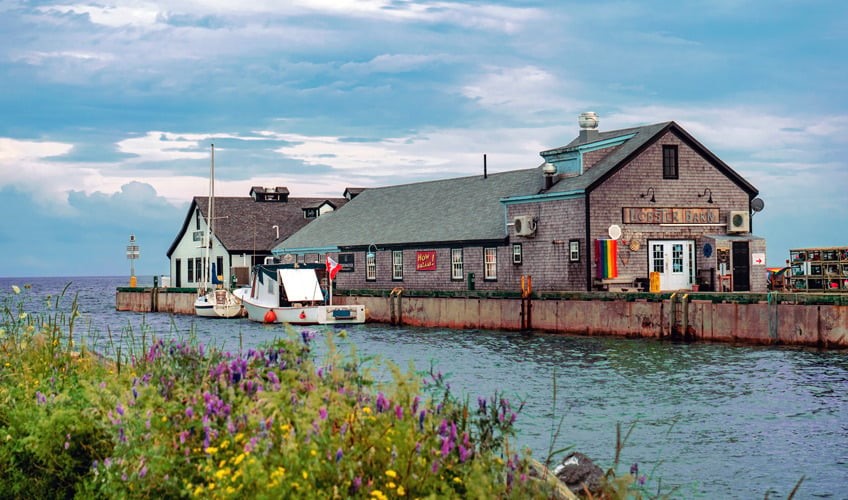
Ẩn mình bên bờ nam đảo Prince Edward (PEI), làng nhỏ Victoria-by-the-Sea đã chiếm trọn trái tim du khách quốc tế — và ghi tên mình trong danh sách 50 Làng Đẹp Nhất Thế Giới 2025 do Forbes bình chọn. Làng đứng vị trí thứ 23, gây ấn tượng bởi những ngôi nhà pastel, bờ cát đỏ và hương vị hải sản lan tỏa.
Làng như bước ra từ câu chuyện cổ tích
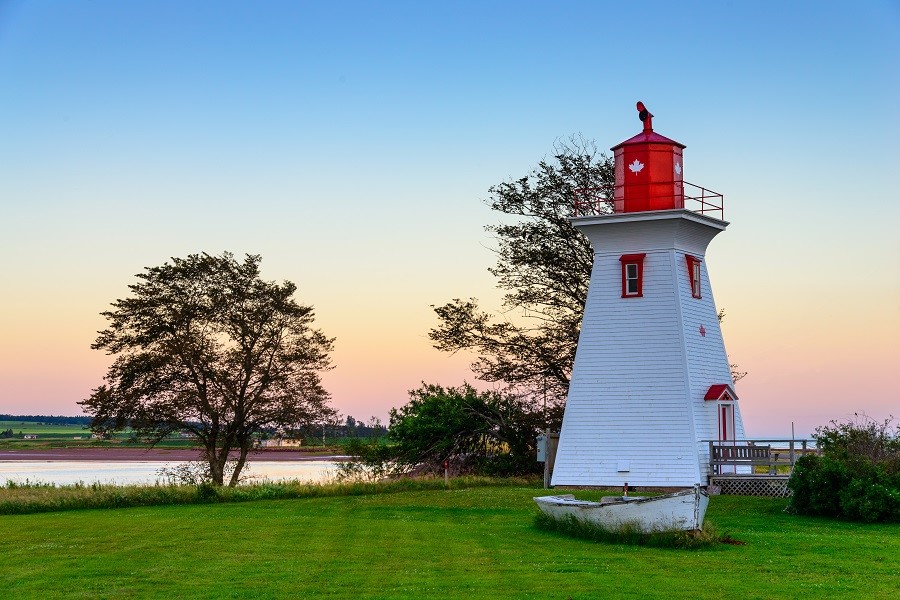
Victoria By The Sea Lighthouse
Thành lập từ năm 1819, Victoria-by-the-Sea hiện có 139 cư dân (theo điều tra dân số 2021). Những ngôi nhà pastel dọc bờ biển, thuyền kayak trên eo biển Northumberland, quán cà phê thoảng mùi lobster, và hải đăng Victoria Seaport tạo nên một khung cảnh bình yên. Điểm nhấn văn hóa gồm có Victoria Playhouse, Studio Gallery, cùng những cửa hàng nghệ nhân.
Vì sao là điểm đến đáng giá
Chân thực: Không ồn ào, chỉ có hải đăng, thuyền đánh cá, và tình làng nghĩa xóm.
Thiên nhiên đặc sắc: Cát đỏ, biển hiền hòa, lý tưởng cho kayak, dạo biển.
Ngôi sao du lịch mới nổi: Đảo PEI được dự báo là điểm đến hàng đầu năm 2026.
Mẹo nhỏ khi đến Victoria
Thời điểm đẹp nhất: Cuối xuân đến đầu thu.
Điểm nên ghé: Hải đăng Victoria Seaport, Nhà hát Victoria Playhouse, ẩm thực hải sản, kayak, phòng tranh và cửa hàng thủ công.
Cách đến: Nằm giữa Charlottetown và Summerside, bờ nam đảo PEI.
Victoria-by-the-Sea không chỉ đẹp mà còn gợi nhớ rằng vẻ đẹp đôi khi nằm trong điều nhỏ bé: ánh sáng nhẹ nhàng, chi tiết tinh tế, và nhịp sống cộng đồng.
Nestled along the southern shore of Prince Edward Island, the tiny village of Victoria-by-the-Sea has captured global hearts—and a well-deserved spot on Forbes’ “The World’s 50 Most Beautiful Villages” for 2025. Ranked #23, it charmed Forbes’ editors with pastel cottages, red‑sand coastlines, and lobster‑scented harbour air.
A Village That Feels Like a Postcard
Victoria By The Sea Lighthouse
Founded in 1819, Victoria-by-the-Sea is home to just 139 people (2021 census). Pastel‑coloured cottages line the shore, kayakers paddle along the Northumberland Strait, cafés drift with the aroma of fresh seafood, and the Victoria Seaport Lighthouse stands tall. Cultural highlights include the Victoria Playhouse, the Studio Gallery, and artisan shops that give the village its living‑painting feel.
Why It Matters
Authenticity: Maritime character, lighthouses, fishing boats, and community spirit.
Natural Beauty: Red‑sand beaches, calm waters, ideal for kayaking and long walks.
Travel Spotlight: Prince Edward Island has also been named a top travel destination for 2026.
Insider Tips for Visiting
When to Go: Late spring through early autumn.
Don’t Miss: Victoria Seaport Lighthouse, Victoria Playhouse, seafood dining, kayaking, and local galleries.
How to Get There: Between Charlottetown and Summerside on PEI’s south shore.
Victoria-by-the-Sea is more than just a pretty place—it’s a reminder that beauty often lies in small things: soft light, handcrafted details, and the rhythm of community.
Winnipeg is alive with stories. Every corner I turned on a recent trip to Manitoba seemed to hold a piece of history, a celebration of culture, or a reminder of resilience. I thought I was just coming for sunshine and festivals, but what I found was a city that tells its stories boldly—through art, food, gardens, and dance.
Reclaiming Power and Place
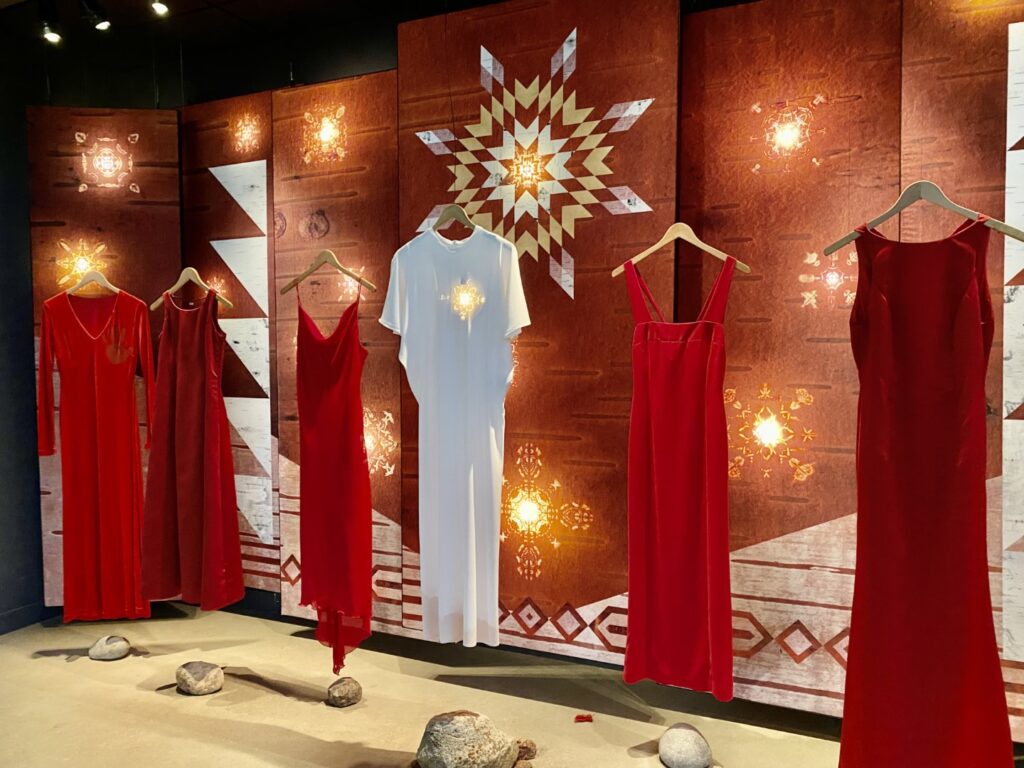
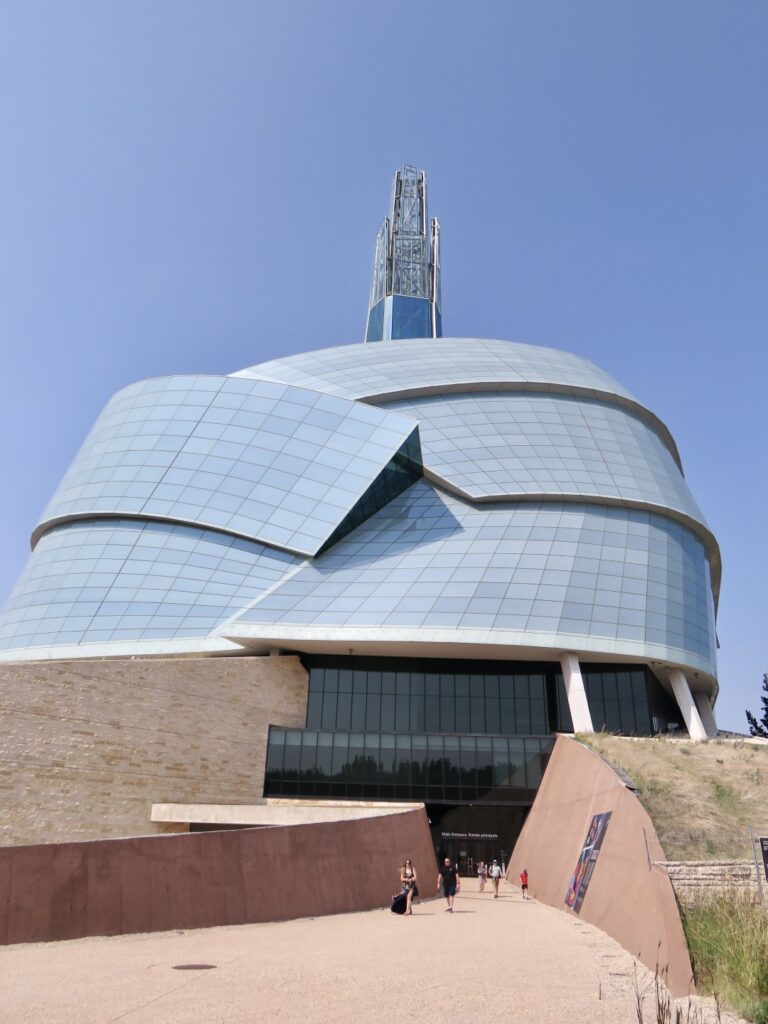
One of my first stops was the Canadian Museum for Human Rights, where I viewed Only in Darkness Can We See the Stars, an installation by Jaime Black-Morsette and KC Adams. At the centre of the piece is the white dress of Sky Woman, surrounded by empty red dresses. Some of the dresses bore clay handprints—haunting, and grounding, connecting back to the land.
Standing there, I felt the silence of loss but also the strength of reclamation. It wasn’t just an exhibit; it was a call to care, to remember, and to act.
Love in a Dangerous Time
Another exhibit in the Museum, Love in a Dangerous Time, pulled me into a different story—Canada’s government and RCMP “LGBT Purge.” The immersive “Dark Space” was designed as an interrogation room, cold and unsettling, a reminder of the fear so many lived through. But what struck me most was the resilience. Survivors not only fought back but paved the way for future generations. I even had the chance to ask questions of survivors through an interactive voice interface—such a moving way to connect with living history.
A Day at The Leaf
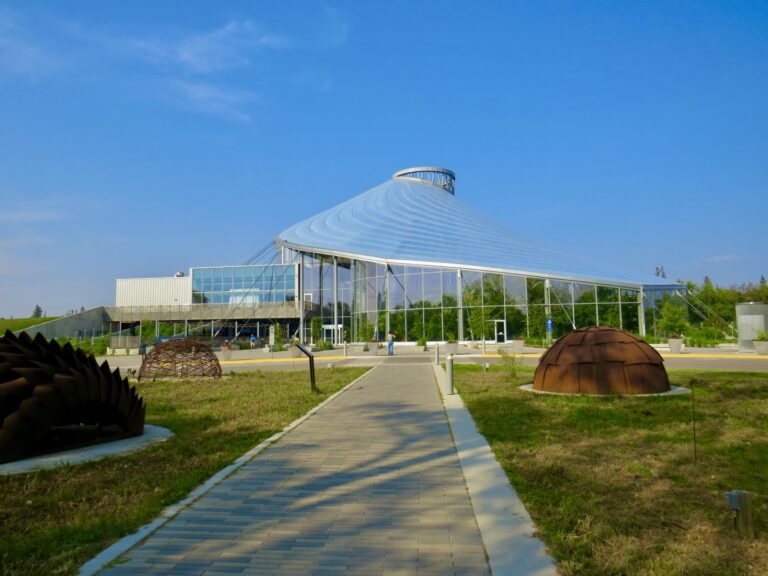
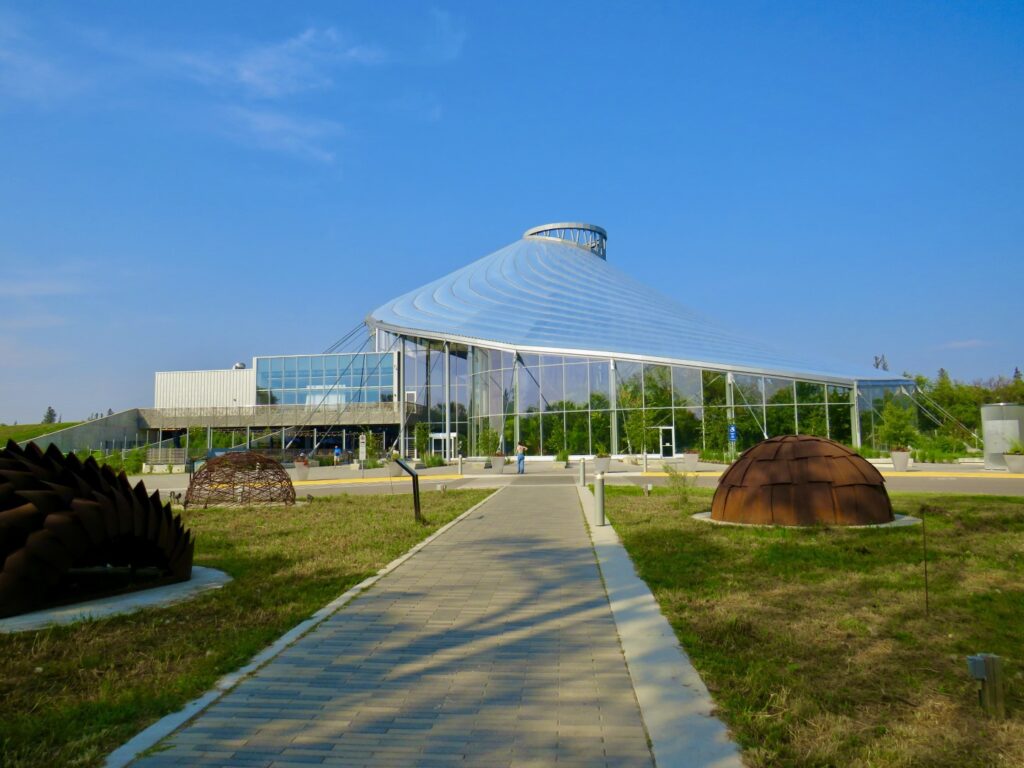
After such heavy stories, I needed something uplifting. The Leaf in Assiniboine Park was where I found it. I wandered through the Indigenous Peoples’ Garden, breathing in the scent of sage and cedar, pausing at the fire node, and imagining the elders who gather here to share stories.
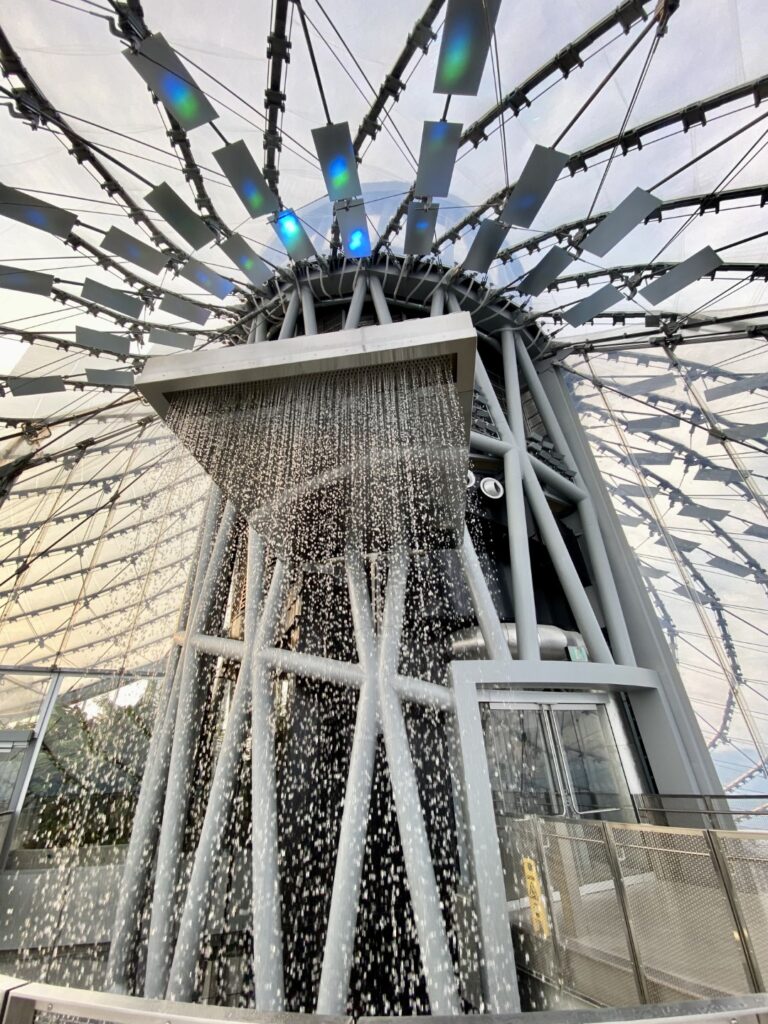
Inside, I lost track of time watching Canada’s largest indoor waterfall cascade down in the tropical biome, then stepped into the dry heat of the Mediterranean garden filled with cacti. It felt like traveling across continents in an afternoon.
Dinner at Gather Craft Kitchen & Bar that evening was unforgettable. Chef Mike de Groot’s menu is seasonal and creative, and I couldn’t resist the saffron gnocchi with beurre blanc. The herbs came straight from The Leaf’s gardens, and the cocktail I had—bright with garden-fresh flavours—was the best way to end a day rooted in culture and nature.
A Trip to Gimli
A one-hour drive north of the city took me to Gimli for the Icelandic Festival of Manitoba, or Íslendingadagurinn. Between Viking battles, dunking competitions, and stories of huldufólk—the “hidden people” of Iceland—it felt like I’d been transported. There was even a Viking Village peopled by re-enactors who demonstrated food preparation, crafts, and games played hundreds of years ago.
At the Iceland Heritage Museum, I learned how Gimli grew to be the largest Icelandic community outside Iceland. In the late 1870s, natural disasters and limited resources drove people to seek a place where they could thrive and maintain their language and culture. Canada offered that and, for a time, even allowed them to self-govern. With a fishing heritage, they were also drawn to Gimli since it sits on Lake Winnipeg.
The lake is home to abundant populations of walleye (pickerel), perch, and whitefish. At Kris’ Fish & Chips the golden fried pickeral and crispy chips were a highlight.
The whole town was buzzing with pride in its Icelandic roots. It’s no wonder “Gimli” translates to “Heaven on Earth.”
Stories at the WAG-Qaumajuq
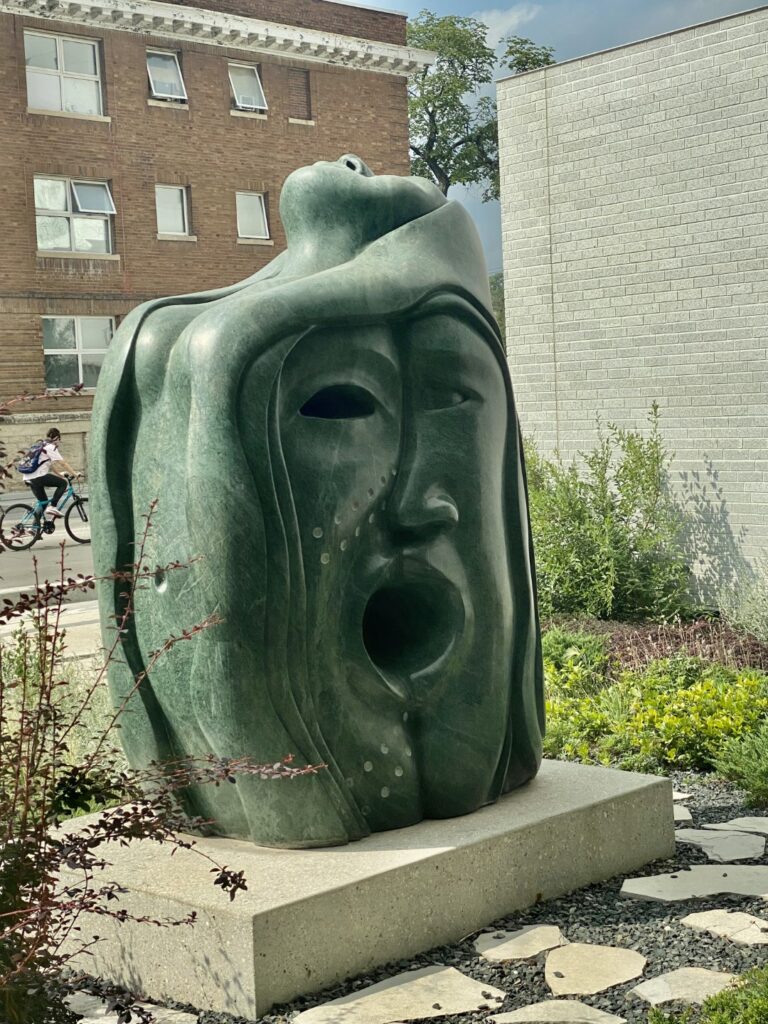
Back in the city, the Winnipeg Art Gallery-Qaumajuq pulled me in with its incredible collection of Inuit art. I was able to touch screens that let me search by artist and region. The story of Sedna, the sea goddess with a whale’s tail who is sometimes kind, sometimes cruel, was an ongoing theme in the soapstone sculptures. Outside, I found myself captivated by Tuniigusiia/ The Gift by Goota Ashoona, a single-stone sculpture made of Verde Guatemala marble. It depicted a grandmother teaching her granddaughter to throat sing. As powerful as it was tender. The artwork was commissioned by the Manitoba Teachers’ Society “to honour teachers all around us—in the land and in our lives—who reveal the truth, wisdom and beauty that connect us all.”
Cheese, Wine, and Whimsy at Sharecuterie
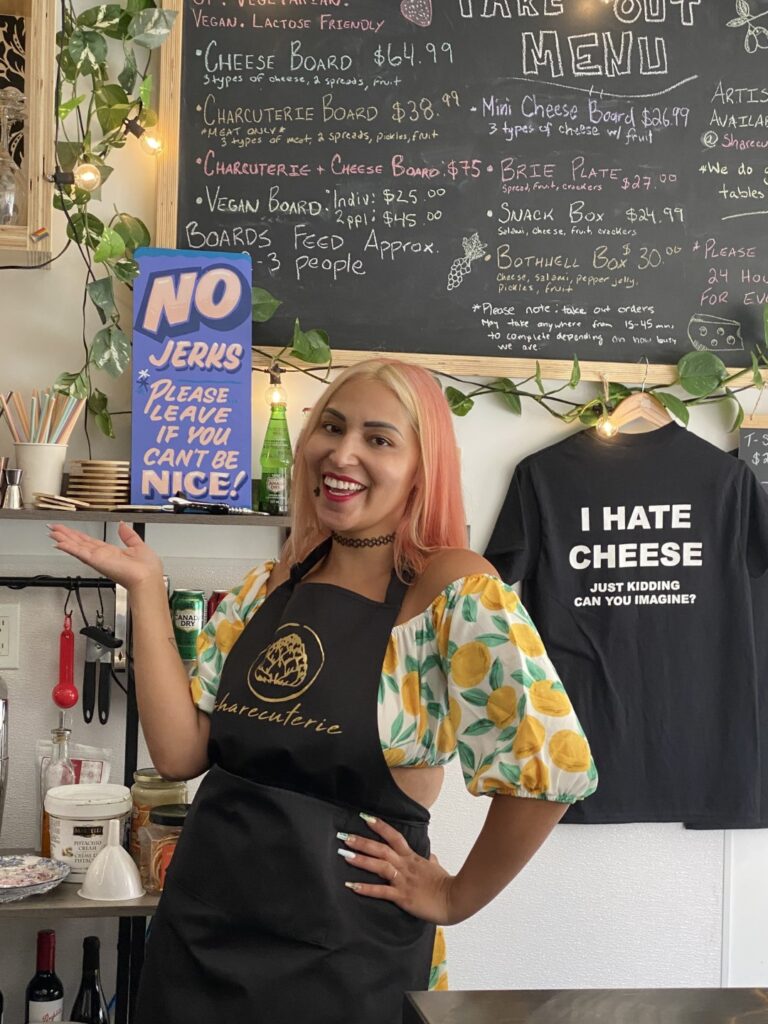
One afternoon, I ducked into Sharecuterie, a café dreamed up by Cassandra Carreiro. Imagine whimsical décor, vintage French music, and charcuterie boards that are as photogenic as they are delicious. A former psychiatric nurse of Indigenous-Portuguese heritage, Carreiro embraced her passion for beautiful meats and cheeses during the pandemic. And just like that, a new business was born. It really took off, and she moved from her home kitchen to the current bricks-and-mortar location in 2023.
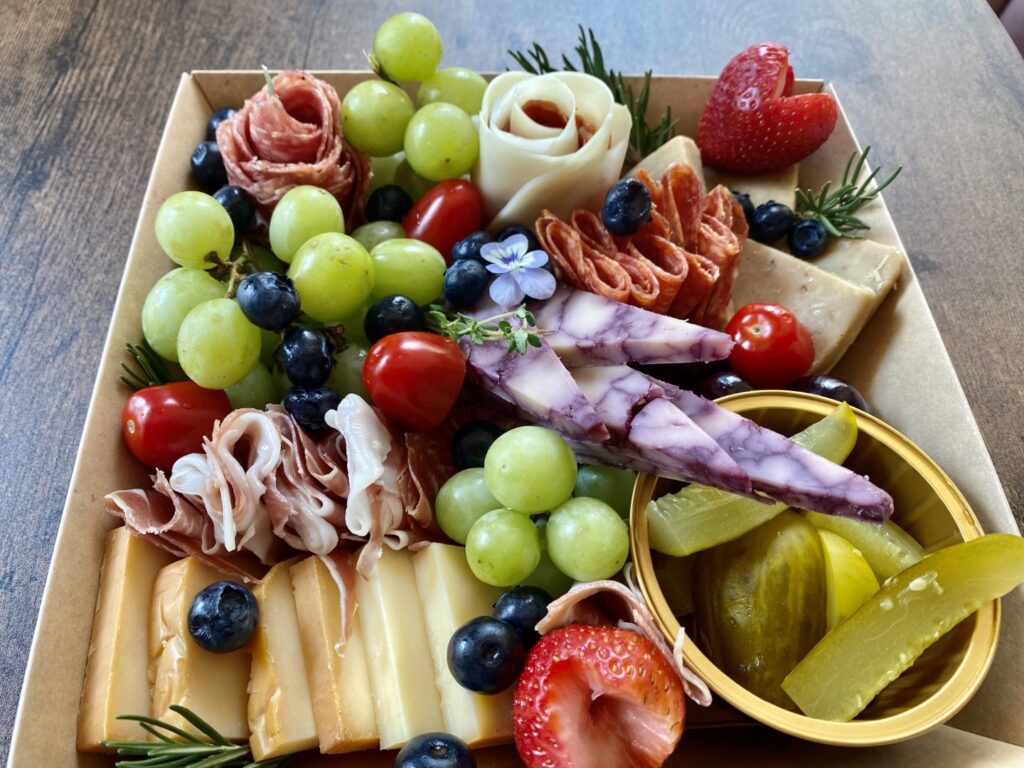
I joined one of her workshops, where she showed us how to make roses out of salami (yes, roses!) and how to layer cheeses and fruit for maximum “wow.” We nibbled smoked Gouda, port wine, Derby cheddar, and fresh fruit, finishing with a sprinkle of edible flowers. It felt like art class, but tastier.
Folklorama Nights
To wrap up my Winnipeg summer journey, I dove into Folklorama, the city’s iconic multicultural festival. At the Métis Pavilion, fiddlers and jig dancers stomped so hard I half believed the stories about wearing out moccasins in one night. The Filipino and Tamil pavilions dazzled with costumes and choreography, and everywhere I went, I was welcomed with food, music, and laughter.
A Few Food and Beverage Highlights
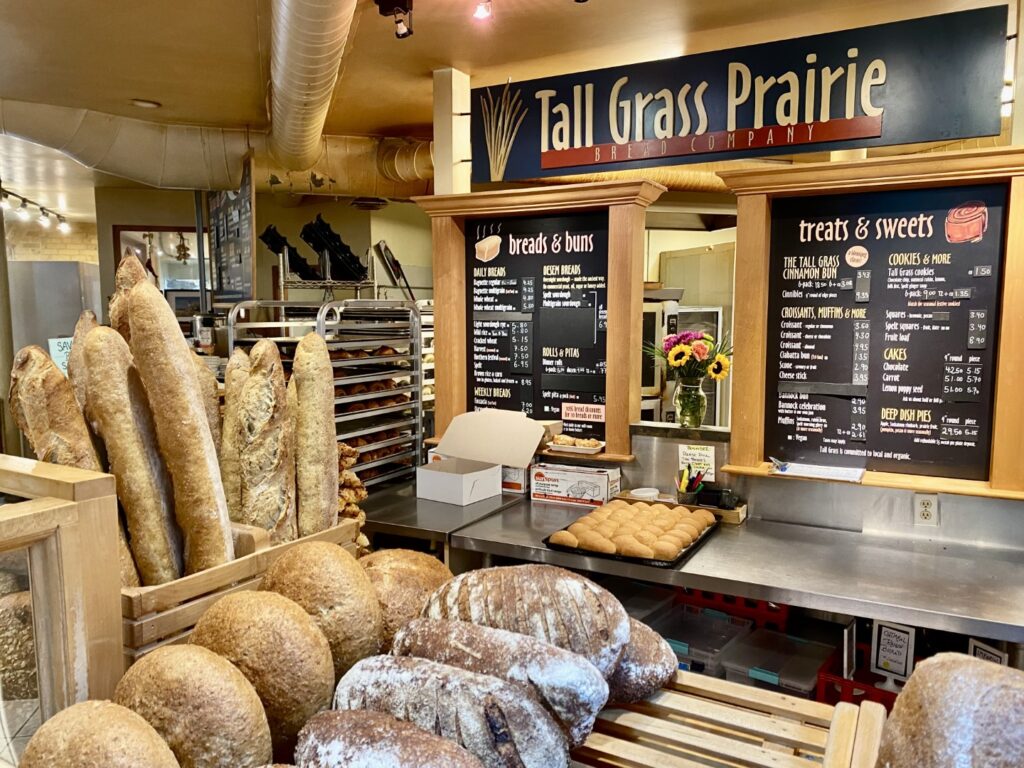
At The Forks, you can eat and drink to your heart’s content from a variety of vendors. The scones and baked goods were outstanding at Tall Grass Prairie Bread. For local craft beer and wine from around the world, The Common had 20 brews and 20 vintages on offer. There were lots of places to grab a snack or meal, plus upstairs, I did a little shopping for made-in-Manitoba products.
Le Croissant, a French bakery in the Francophone St. Boniface neighborhood, had some of the butteriest, most flaky croissants I have ever tasted.
Another great breakfast spot was Roasted Nomad, which serves generous portions of eggs Benedict, blueberry pancakes with caramel and bananas, and huevos rancheros.
By the end of my trip, I realized Winnipeg isn’t just a place to visit—it’s a place that tells stories. Some are heavy, some joyful, some delicious, but all are deeply human. Every season has its own narrative. No matter when you go, you’ll leave not only with memories but with a new sense of connection to culture, history, and community.
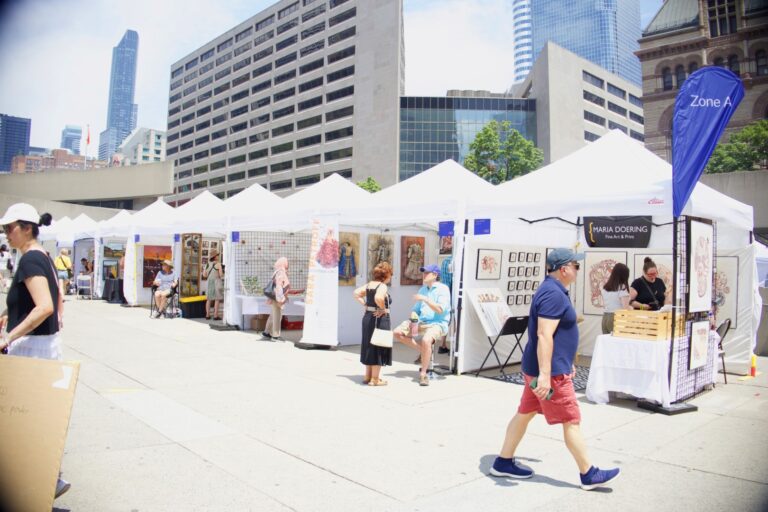
Những chiếc lều vải phủ đầy Quảng trường Nathan Phillips Square khi đám đông tản bộ qua các hàng tranh, tượng điêu khắc và sản phẩm thủ công mỹ nghệ. Tại Hội chợ Nghệ thuật Ngoài trời Toronto – Toronto Outdoor Art Fair 2025, các nghệ sĩ mang đến những câu chuyện cá nhân và tinh thần sáng tạo bền bỉ, biến sự kiện này không chỉ là một chợ nghệ thuật — mà còn là một sự kiện nghệ thuật truyền thống của Toronto.
Hội chợ thường niên này quy tụ hơn 400 nghệ sĩ Canada và quốc tế, kết nối các sáng tạo từ nhiếp ảnh, gốm sứ, mixed media và mỹ thuật với hàng trăm khách tham quan, người yêu nghệ thuật và khách hàng tiềm năng.
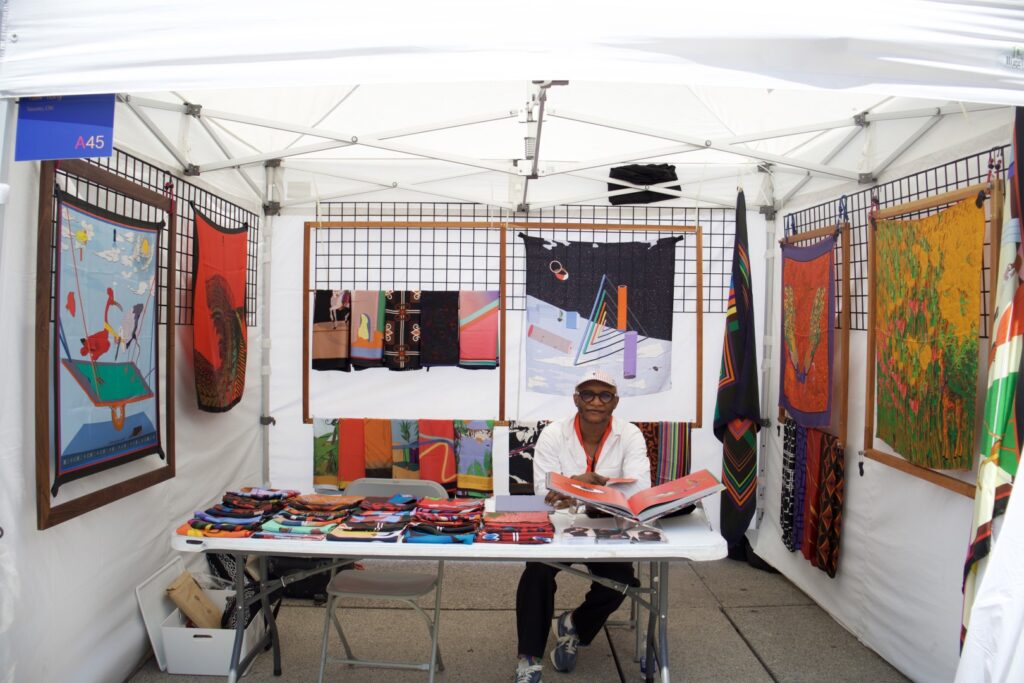
Trong số đó có nghệ sĩ Toronto Yaw Tony, người có nền tảng học vấn về kiến trúc, thiết kế đồ họa và mỹ thuật. Những chiếc khăn choàng đầy màu sắc của anh không chỉ là thời trang mà còn là phương tiện kể chuyện.
“Tôi thích dùng các loài động vật để đại diện cho tính cách con người,” Tony chia sẻ.
Quá trình sáng tạo của anh bắt đầu từ những bản phác thảo tay, sau đó được số hóa và in trên vải. Một chiếc khăn thể hiện hai chú chim nối với nhau bằng dây thun, cân bằng trên một tấm sàn treo trên một bánh xe đơn — hình ảnh mà Tony nói rằng đại diện cho sự phức tạp trong các mối quan hệ của con người.
Gian hàng của nghệ sĩ Toronto Yaw Tony tại Toronto Outdoor Art Fair 2025 ở Nathan Phillips Square (Credit: Rayana Daniel/Culture Magazin)
“Có hai chú chim đang cố gắng duy trì mối quan hệ. Đôi khi chúng hợp, đôi khi chúng xung đột. Để một mối quan hệ hoạt động, cần có sự thấu hiểu nhất định,” Tony nói.
Tuy nhiên, việc tạo ra nghệ thuật có ý nghĩa không phải lúc nào cũng mang lại sự ổn định về tài chính, khiến con đường nghệ thuật trở nên bấp bênh và đầy thử thách.
Tony nhấn mạnh rằng nghệ thuật sẽ khó được đánh giá đúng nếu thiếu hiểu biết rằng đó là một cuộc đối thoại hai chiều giữa nghệ sĩ và xã hội.
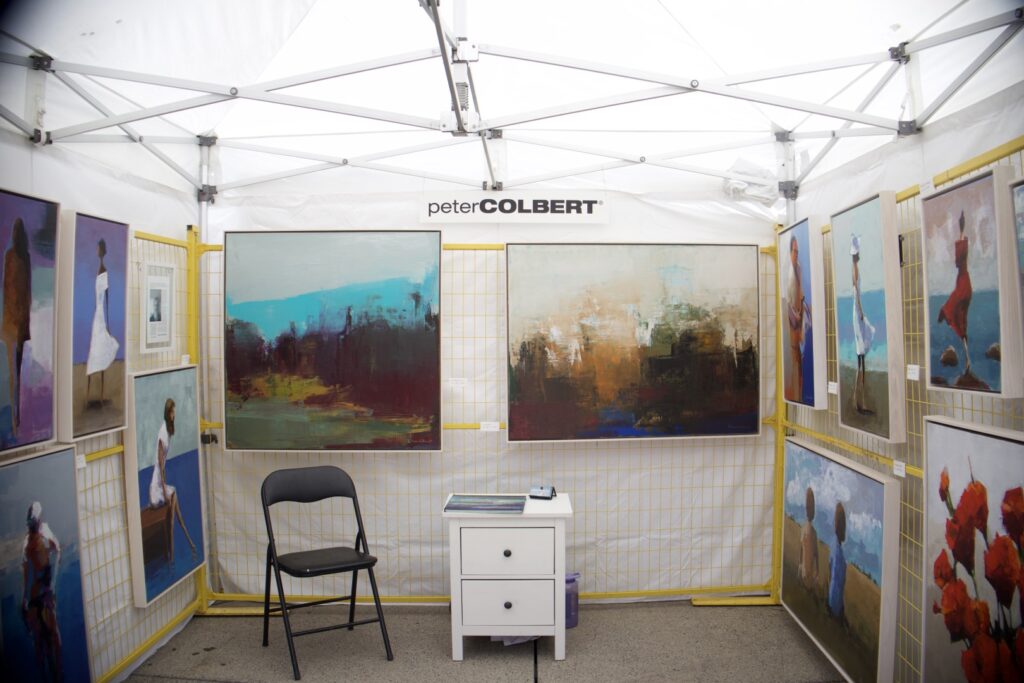
Đối với nghệ sĩ Peter Colbert, thử thách không chỉ là được thấu hiểu mà còn là lúc bắt đầu.
“Khi mới bắt đầu, bạn sẽ bị choáng ngợp trước khung vải và đống màu sơn. Bạn phải bắt đầu từ những bước nhỏ. Chỉ cần đi từng bước và phát triển dần dần,” anh nói.
Gian hàng của nghệ sĩ Toronto Peter Colbert tại Toronto Outdoor Art Fair 2025 ở Nathan Phillips Square (Credit: Rayana Daniel/Culture Magazin)
Colbert từng học quảng cáo tại Cao đẳng Humber College trước khi nhận học bổng theo học tại Đại học Nghệ thuật và Thiết kế Ontario (College of Art and Design University), và sau đó làm việc như một họa sĩ minh họa.
“Khi làm việc thương mại, tôi không cảm thấy có cảm hứng. Chỉ khi quay trở lại với nghệ thuật thuần túy, tôi mới thấy mình có toàn quyền tự do khám phá thế giới hội họa và vẽ, và thể hiện bản thân một cách cô đọng nhất,” anh chia sẻ.
Colbert sử dụng sơn acrylic kết hợp với dao pha màu, con lăn và cọ để tạo nên các tác phẩm nhiều lớp.
“Tôi muốn tạo ra những bức tranh mang lại sự chữa lành cảm xúc và có sức hút cá nhân. Tôi muốn nắm bắt khoảnh khắc ngắn ngủi để truyền tải nhiều nhất từ một cảnh vật,” Colbert nói.
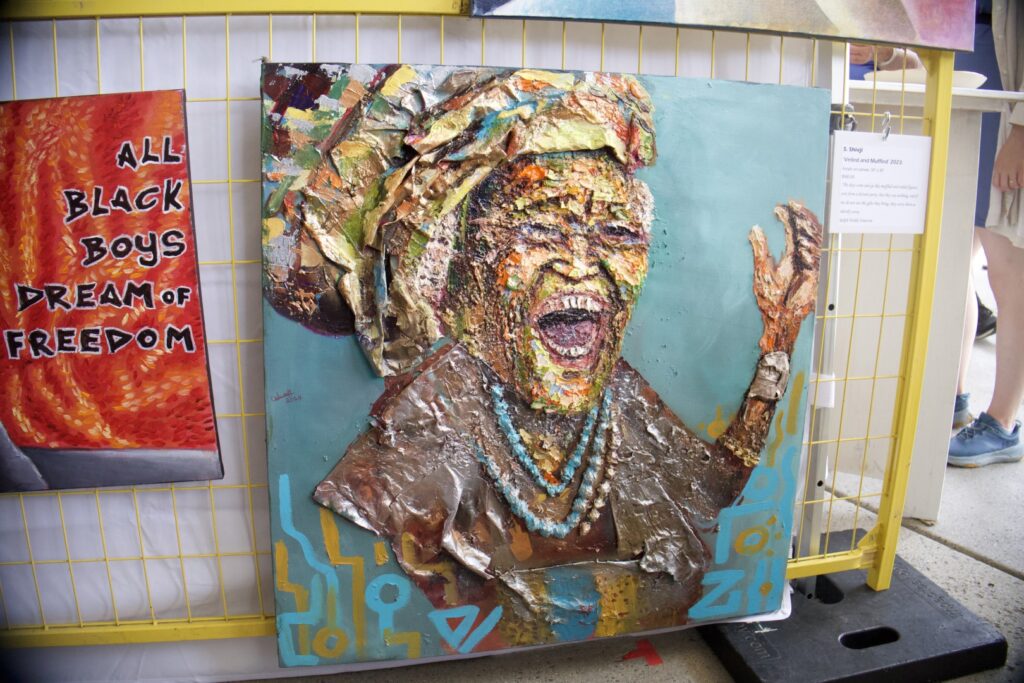
Với một số nghệ sĩ khác, nghệ thuật là cách để tưởng nhớ gia đình và quá khứ. Những ký ức về tuổi thơ của Gerald Odwari xuất hiện trong các tác phẩm của anh.
Trong một bức tranh trưng bày tại gian hàng của mình, những cuốn vở bài tập Musana được bày ra phía sau một đứa trẻ đang mỉm cười. “Đây là loại vở mà chúng tôi dùng ở quê nhà Uganda, do chính phủ phát hành. Nó khiến tôi nhớ về quê hương,” anh chia sẻ.
Tác phẩm điêu khắc của nghệ sĩ Uganda Gerald Odwari về bà của anh (Credit: Rayana Daniel/Culture Magazin)
Odwari, một nghệ sĩ Uganda hiện sống tại Toronto, tạo ra các tác phẩm điêu khắc và tranh vẽ từ giấy tái chế. Anh kể lại thời thơ ấu, anh thường cùng bà thu gom giấy ở chợ địa phương để làm vật liệu viết — trải nghiệm này nay là nguồn cảm hứng cho quá trình sáng tạo của anh.
Dù luôn mang tình cảm sâu đậm với quê hương, anh đã tìm thấy một cộng đồng chào đón ở Toronto. Odwari nói rằng người dân Toronto thường tò mò về cách anh tái sử dụng vật liệu để tạo ra thứ gì đó mới mẻ. “Người Toronto yêu nghệ thuật. Họ yêu những gì tôi làm,” anh nói. Hội chợ Nghệ thuật Ngoài trời Toronto (Toronto Outdoor Art Fair 2025) tiếp tục là bệ phóng cho những tiếng nói mới và là lễ hội tôn vinh sự sáng tạo ngay giữa trung tâm thành phố.