

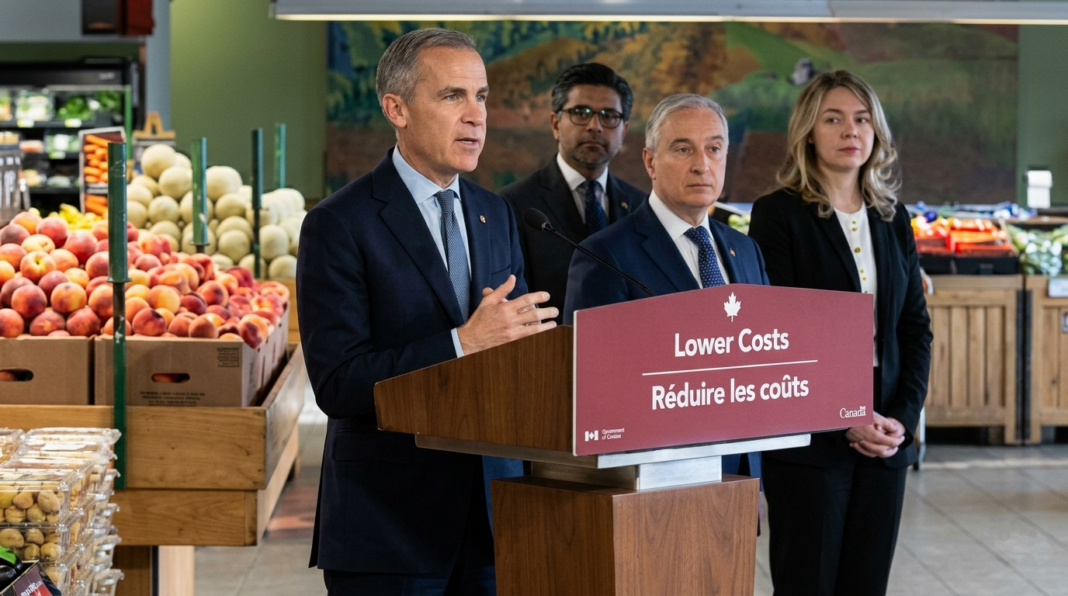

Amid continued pressure from the rising cost of living, the federal government has begun distributing a new financial support program aimed at helping millions of Canadians afford essential goods. Payments started rolling out on June 5.
The program, known as the Canada Groceries and Essentials Benefit (CGEB), marks a significant shift in Canada’s income support system. It will gradually replace the existing GST/HST credit starting in July 2026, introducing a more expanded and structured benefit designed to better reflect today’s cost-of-living realities.
According to federal estimates, more than 12 million Canadians are expected to qualify for the program, which aims to help households cover everyday essentials such as groceries, utilities, and other basic expenses.
A transitional “top-up” before the full program launch
Before the full rollout of CGEB begins, the government is issuing a one-time transitional payment in the form of a GST top-up.
This payment equals 50% of the annual GST/HST credit that eligible Canadians would normally receive.
In practice, this means households are receiving an additional payment in June rather than waiting for the next scheduled quarterly credit—providing short-term relief while the new system is phased in.
The exact amount varies depending on income level, family size, and tax filings from 2024.
Who is eligible?

According to the Canada Revenue Agency (CRA), eligibility requirements include:
- Being 19 years of age or older
- Being a resident of Canada for tax purposes
- Having filed a 2024 tax return
- Meeting the income threshold
For example, a single individual without children may qualify if their income is below approximately C$56,181, with higher thresholds applying for families with dependents.
Payment amounts: up to C$717 per household
Under the current structure, benefit amounts are tiered based on household composition:
- Single adult: up to C$267
- Couple without children: C$349
- One child: C$441
- Two children: C$533
- Three children: C$625
- Four children: C$717
In cases of shared custody, the benefit is typically split between parents.
When and how payments are issued
Payments began rolling out on June 5, and in some cases may still appear under the older GST/HST credit label during the transition phase.
Recipients who have signed up for direct deposit will receive funds directly into their bank accounts, while others will receive cheques by mail.
The government encourages Canadians to use direct deposit to ensure faster and more secure delivery.
Long-term changes: a 25% increase over five years
Starting in July 2026, the CGEB will fully replace the GST/HST credit and enter its long-term implementation phase.
One of the key changes is a planned 25% increase in quarterly payments over five years, aimed at strengthening affordability support across Canadian households.
Estimated annual values include:
- Single individuals: around C$679 per year
- Couples: approximately C$890 per year
- Children: about C$234 per child per year
Actual amounts will still vary depending on income and tax status.
Mostly automatic, with some exceptions
Most Canadians will not need to apply for the benefit, as eligibility is determined automatically through tax filings.
However, some individuals—particularly new immigrants or those with incomplete tax records—may need to submit additional documentation.
Payments may be withheld in cases where:
- The 2024 tax return has not been filed
- The individual did not qualify for previous GST credits
- Household information is outdated or incorrect
- Outstanding tax debts exist
A broader shift in Canada’s affordability policy
The rollout of this program reflects a dual policy approach: immediate financial relief combined with long-term restructuring of Canada’s affordability support system.
As food and living costs remain a central concern for many households, the CGEB is expected to provide meaningful relief while reshaping how federal benefits are delivered in the years ahead.